CS2 Just Banned 30,000+ Accounts in a Single Day — Here's What Happened to Their Skins
Between August 6 and 10, 2026, Valve ran one of the larger enforcement sweeps CS2 has seen in months, and the numbers behind it are genuinely striking: over 30,000 accounts banned, tens of thousands of dollars in skins frozen in place, and a strange twist where a meaningful chunk of the banned value ended up un-banned within days. Here's the full picture, and why it matters even if you've never farmed anything in your life.

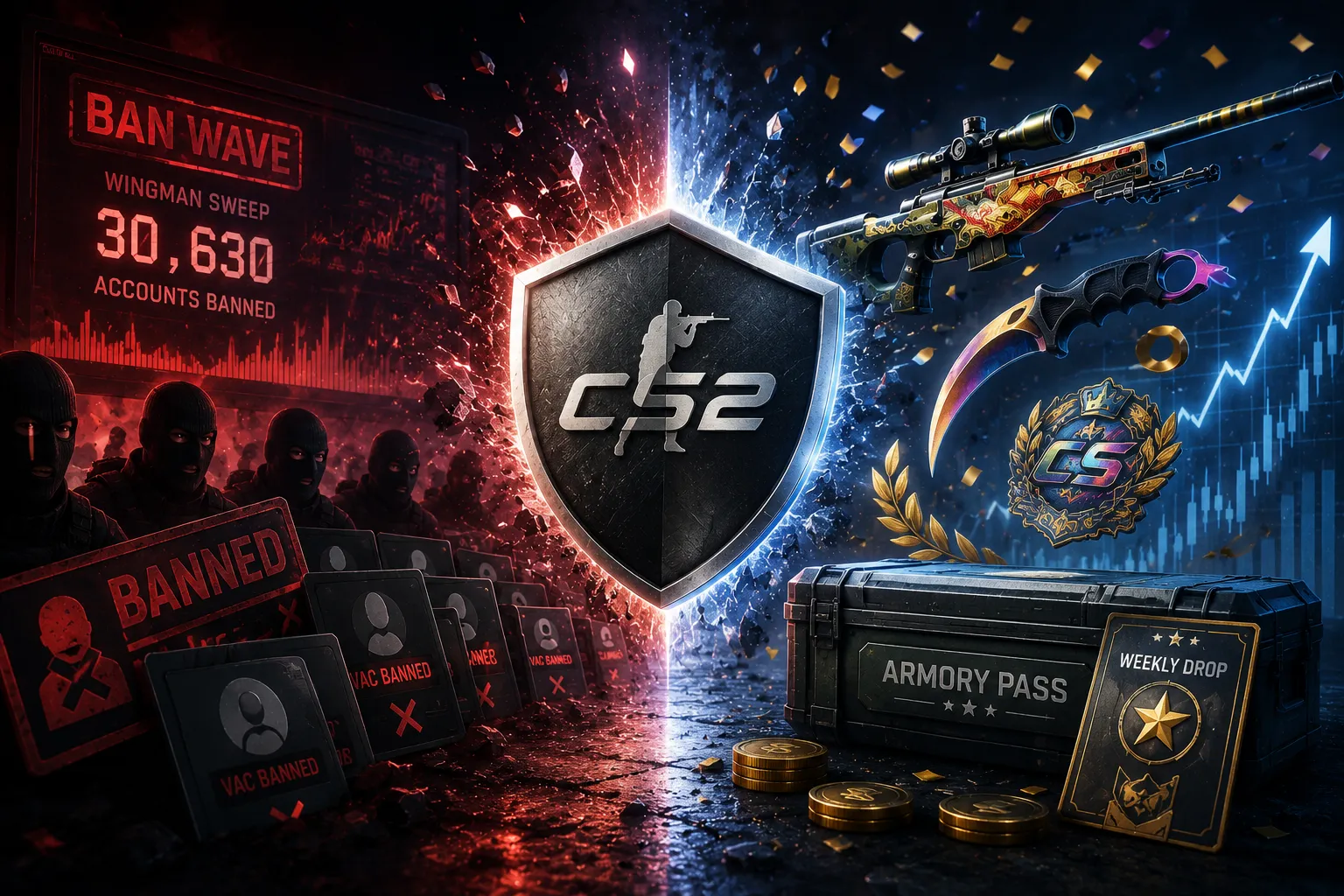
A quick note on sourcing before diving in: Valve doesn't publish detailed per-wave breakdowns with dollar figures, so the specific numbers below come from independent community ban-tracking services that monitor account status at scale, not an official Valve statement. These trackers have a solid track record of catching the shape of these waves even when Valve stays quiet, but treat the exact figures as a well-informed community estimate rather than an official count.
What Actually Happened Between August 6 and 10
Valve ran a ban sweep targeting CS2's Wingman mode, the 2v2 game type that's become a popular target for farming operations because it's faster to grind through than standard competitive matches. According to community tracking, the wave logged somewhere between 30,035 and 30,630 accounts by the time re-checks were finished, with roughly 15,141 of those accounts still holding items at the time of the ban, collectively worth about $69,361. The single most valuable inventory caught in the sweep was worth $5,618, and that particular account had already been identified in the very first pass of the wave rather than turning up later.
For scale, normal daily ban activity in CS2 sits around 700 game bans on an ordinary day. This wave landed at roughly twenty times that volume in a single day, which is the kind of gap that makes clear this wasn't routine background enforcement, it was a deliberate, targeted action.
The Twist: A Lot of These Bans Didn't Stick
Here's the detail that makes this wave particularly interesting rather than just another big number. Once the full sweep was complete, trackers identified 326 accounts that had their bans reversed within three days of being hit, and those 326 accounts alone were holding $47,942 worth of items, which works out to roughly 40% of the entire dollar value caught in the wave. That's a genuinely large share of the action getting walked back in a short window, and it's a useful reminder that automated enforcement at this scale isn't perfectly precise. Some accounts get caught in the net that shouldn't be, and Valve's appeals or internal review process apparently reversed a meaningful chunk of them within days.
This Is the Third Wingman-Focused Wave in Two Months
This wasn't an isolated event. Community trackers note this as the third wave specifically targeting Wingman farming within roughly a two-month span, and the pattern suggests Valve has landed on a detection method that actually works against this specific style of farming, rather than a one-off sweep. Farming operations affected by these waves have reportedly lost 70% to 80% of their active accounts across the recent rounds, and at least one operator described going from over 250 working accounts down to roughly 10. If that pattern holds, Wingman farming in its current form looks like it's becoming a genuinely bad business to be in.
The underlying farming method itself is fairly simple: operators fill private Wingman lobbies with bot-controlled accounts on both sides, letting matches play out automatically to farm weekly item drops and Armory Pass progress without any real human input. It's cheap to run at scale, which is exactly why it kept coming back after earlier crackdowns, and exactly why Valve appears to be running this detection method on repeat rather than treating it as solved after one wave.
Why This Matters Even If You've Never Farmed Anything
If you're an ordinary player or someone buying and selling skins on the open market, none of this looks like it should touch you directly, farming bans hit farming accounts. But there's a wrinkle worth knowing about. Earlier in 2026, during a separate large-scale action against bot-farmed Armory output, Valve made clear that destination accounts, meaning accounts that received farmed items through trades rather than farming them directly, were no longer automatically treated as safe just because they weren't running the bots themselves. If a meaningful volume of farmed output landed in an account through trading, that account carries a real chance of getting flagged during a future review, regardless of whether its owner ever touched a bot script personally.
That doesn't mean every trade you've ever made is at risk, the vast majority of ordinary trading activity has nothing to do with farmed output at all. But it's a good reason to be at least somewhat mindful of where large, suspiciously cheap batches of items are coming from, particularly if a deal looks unusually generous relative to current market prices, which happens to be the same red flag worth watching for in our breakdown of common skin scams.
The Bigger Pattern Behind This
This August wave doesn't exist in isolation. Earlier in 2026, Valve ran a wave in June affecting roughly 100,000 accounts, almost none of which were traditional cheaters, and an even larger action in March that hit around 960,000 bot-farm accounts in a single day, confirmed directly by a CS2 developer as a historic single-day action. Read together, the pattern over 2026 looks less like isolated incidents and more like a sustained, ongoing campaign specifically aimed at the economic infrastructure behind farming, rather than the aim-assist and wallhack cheaters most players associate with anti-cheat enforcement in the first place.
A Way to Enjoy the Skins Side of CS2 Without Any of This Risk
If reading all of this makes the trading and farming side of CS2's economy sound like a minefield of frozen inventories, reversed bans, and account risk you'd rather not think about, that reaction makes sense. If you still want to engage with skins, prices, and rarity in a way that has zero exposure to any of it, that's exactly the space CS Guess occupies. There's no trading, no farmed items changing hands, and no account risk tied to anyone else's behavior, just mini games testing your actual knowledge of the skins economy, with free perks for playing well.
Head over to CS Guess, put your skins knowledge to the test, and enjoy the parts of this economy that don't come with a ban wave attached.