The Real Odds of Pulling a Knife From a CS2 Case in 2026 (And Which Cases Are Actually Worth Opening)
Everyone who's ever opened a CS2 case has heard some version of "the odds of a knife" thrown around, usually as a vague, slightly wrong number repeated in a Discord chat. The real numbers are actually public, disclosed directly by Valve, and once you see them laid out properly, they explain almost everything about why case opening feels the way it does. Here's the complete, accurate breakdown, plus an honest look at which cases actually make sense to open in 2026 and which ones don't.

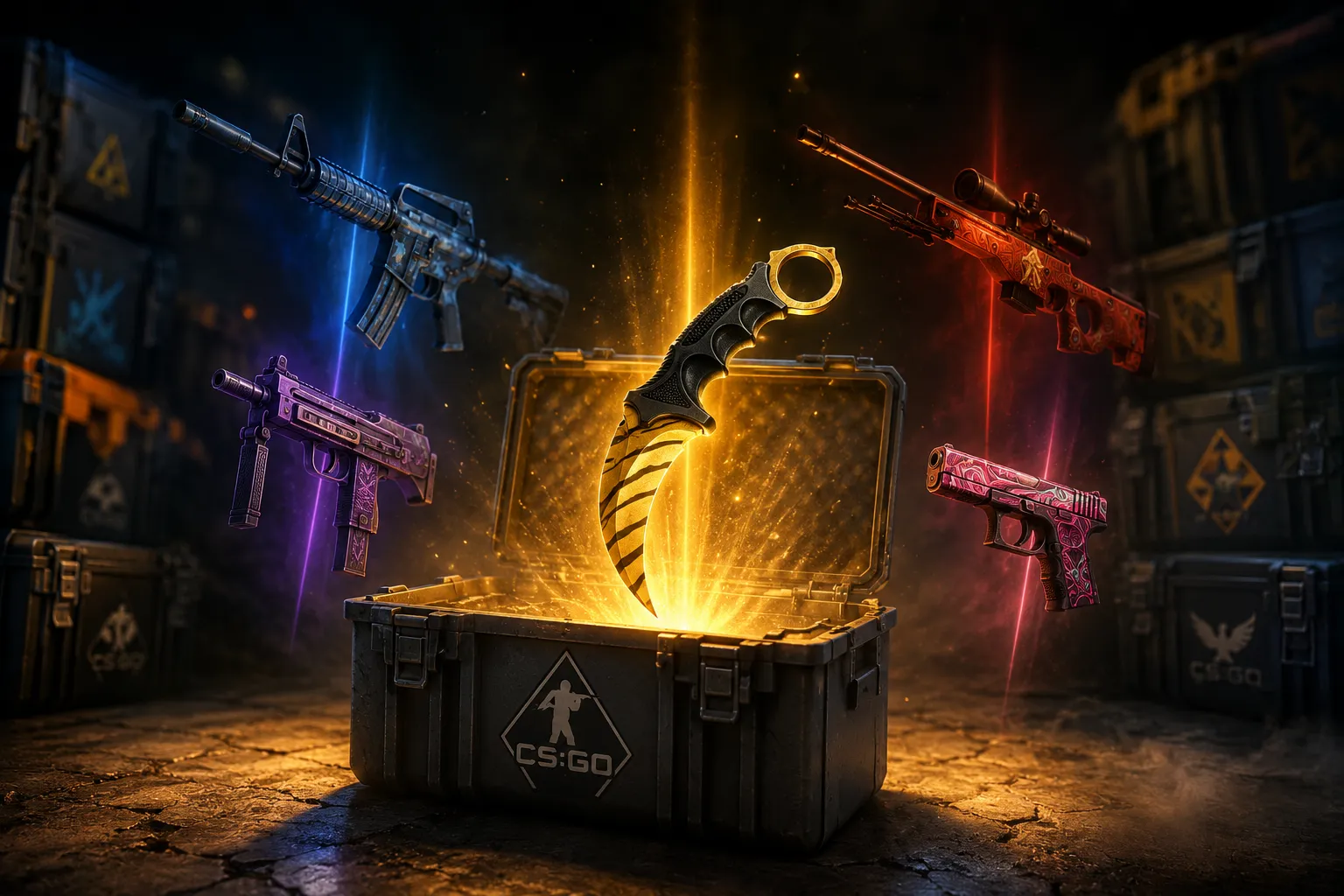
Case opening odds aren't a mystery or a rumor. Valve disclosed the official rarity distribution back in 2017, as part of complying with Chinese gaming regulations that require probability disclosure, and those numbers have stayed exactly the same ever since, verified independently across millions of community-tracked openings in the years since. If you've ever wondered whether the odds are secretly rigged against you, worse on certain days, or different for Prime accounts, none of that is true. The math is fixed, public, and identical across every standard weapon case in the game.
The Actual Numbers, in Full
Every standard CS2 weapon case uses the same five-tier rarity distribution: Mil-Spec (blue) at 79.92%, Restricted (purple) at 15.98%, Classified (pink) at 3.20%, Covert (red) at 0.64%, and Rare Special, the gold tier that contains knives and gloves, at 0.26%. That last number is the one everyone actually cares about, and it works out to roughly 1 in 385 case openings producing a knife or a pair of gloves.
On top of the rarity roll, every single drop has a separate, flat 10% chance of being StatTrak, applied independently of which rarity tier you hit. That means the odds of a StatTrak knife specifically come out to 0.26% multiplied by 10%, which lands at 0.026%, or roughly 1 in 3,850 openings. And that's still just the odds of any knife or glove in the case's pool being StatTrak. If you're chasing one specific skin, say a particular knife model in a case that has a dozen different gold-tier options, you divide that 0.26% further across however many items share that pool, which is why pulling a specific coveted knife is a genuinely compounding long shot rather than just "pretty rare."
Why "1 in 385" Doesn't Mean What Most People Think It Means
This is where the actual math trips people up the most. A 1-in-385 chance doesn't mean you're guaranteed a knife by your 385th case, and it definitely doesn't mean you're "due" for one after a long dry streak. Each case opening is a fully independent event, with zero memory of what happened in any previous case. There's no pity timer in CS2, no hidden counter tracking how unlucky you've been, and no increasing odds the longer you go without a hit. You could open 1,000 cases in a row without a single gold-tier drop, or pull two knives back to back on your very first two openings. Both outcomes are consistent with the same fixed 0.26% probability. Treating a losing streak as meaning a win is "coming due" is a classic gambler's fallacy, and it's one of the most common misunderstandings in this entire hobby.
Opening 50 cases works out to roughly a 12% cumulative chance of landing at least one gold-tier drop somewhere across those 50 opens, which is a useful number if you're trying to think in terms of a realistic session rather than a single case, but it's still not a guarantee, and it's still not the same thing as the odds improving as you go.
Souvenir Packages and Armory Collections Play by Different Rules
Not every container in CS2 uses the same five-tier structure. Souvenir packages, the ones that drop during Major broadcasts, use six rarity tiers instead of five, since there's no gold knife slot at all, and each tier is roughly five times rarer than the one below it. That structure makes the top Covert tier in a souvenir package around 25 times rarer than pulling a Covert from a standard weapon case, which is part of why souvenir versions of iconic skins like the Dragon Lore carry such a premium.
Armory collections, the newer weapon collections introduced alongside CS2's Armory system, use a different five-tier structure that starts at Industrial Grade instead of Mil-Spec and also skips the gold knife slot entirely, landing at roughly five times lower odds for the top tier compared to a standard case. If you're opening one of these expecting knife odds similar to a classic case, that's simply not how the pool is structured, so it's worth knowing which type of container you're actually opening before setting expectations.
The House Edge Nobody Likes Talking About
Here's the part that matters most if you're deciding whether to spend real money on this: the expected value of opening a case is structurally below what you paid for it. Every case requires a key, currently priced at $2.49 in the in-game store, and the combined cost of case plus key is, on average, higher than the market value of what you get back. Estimates on the exact scale of that gap vary depending on the source and the specific case, generally landing somewhere in the range of the average return sitting at roughly 40 to 85% of what you put in, but the direction is completely consistent everywhere it's been measured: on average, you lose money opening cases compared to just buying the skin you wanted directly off the market. That's not a flaw or a scandal, it's simply how the math is built, the same way it's built into every casino game that exists. If you want a specific skin and you're not doing it purely for the thrill of the open itself, buying it directly is almost always the cheaper path.
Which Cases Actually Make Sense to Open in 2026
"Best case to open" is a moving target, since it depends entirely on current market prices for whatever's sitting in that case's rare pool, and those prices shift constantly. That said, at the time of writing, cases like the Kilowatt Case and the Revolution Case have been cited as offering comparatively stronger average returns, largely because the Covert and gold-tier items inside them are currently commanding strong market prices relative to the cost of opening. Older, more expensive legacy cases tend to make less sense purely on expected value, since their rarest contents, while often iconic, don't always keep pace with what a similarly priced newer case returns on average.
Treat any specific case recommendation, including this one, as a snapshot rather than permanent advice. Prices move, new cases get added to rotation, and a case that looks like good value this month can look mediocre in six months once market prices shift. If you're serious about this as anything beyond entertainment, checking current market prices for a case's contents before buying keys is a better habit than relying on any single "best case" list, this one included.
A Free Way to Sharpen Your Instincts Without Touching a Key
If everything above makes case opening sound like exactly what it is, a negative-expected-value form of gambling dressed up as excitement, that's a completely reasonable takeaway. If you still want the thrill of testing your read on rarity, pricing, and what's actually valuable in this game, without spending a cent on keys, that's exactly what the mini games on CS Guess are built for. You're tested on real prices, real patterns, and real rarity questions, and you build up free perks just for playing well, with zero house edge working against you anywhere in the process.
Head over to CS Guess, put your knowledge of skins and rarity to the test, and get the same competitive rush without the math working against you.