CS2 Players' Chat Logs Are Being Exposed Publicly — Here's What Actually Happened
Every message you've ever typed in a CS2 match's all-chat might be sitting on a public, searchable webpage right now, and you don't need to have done anything wrong for it to be there. A third-party tracking site started attaching years of in-game chat history to public player profiles in late August 2026, and the discovery has already caught out streamers and top pros. Here's exactly what happened, and what you can actually do about it.

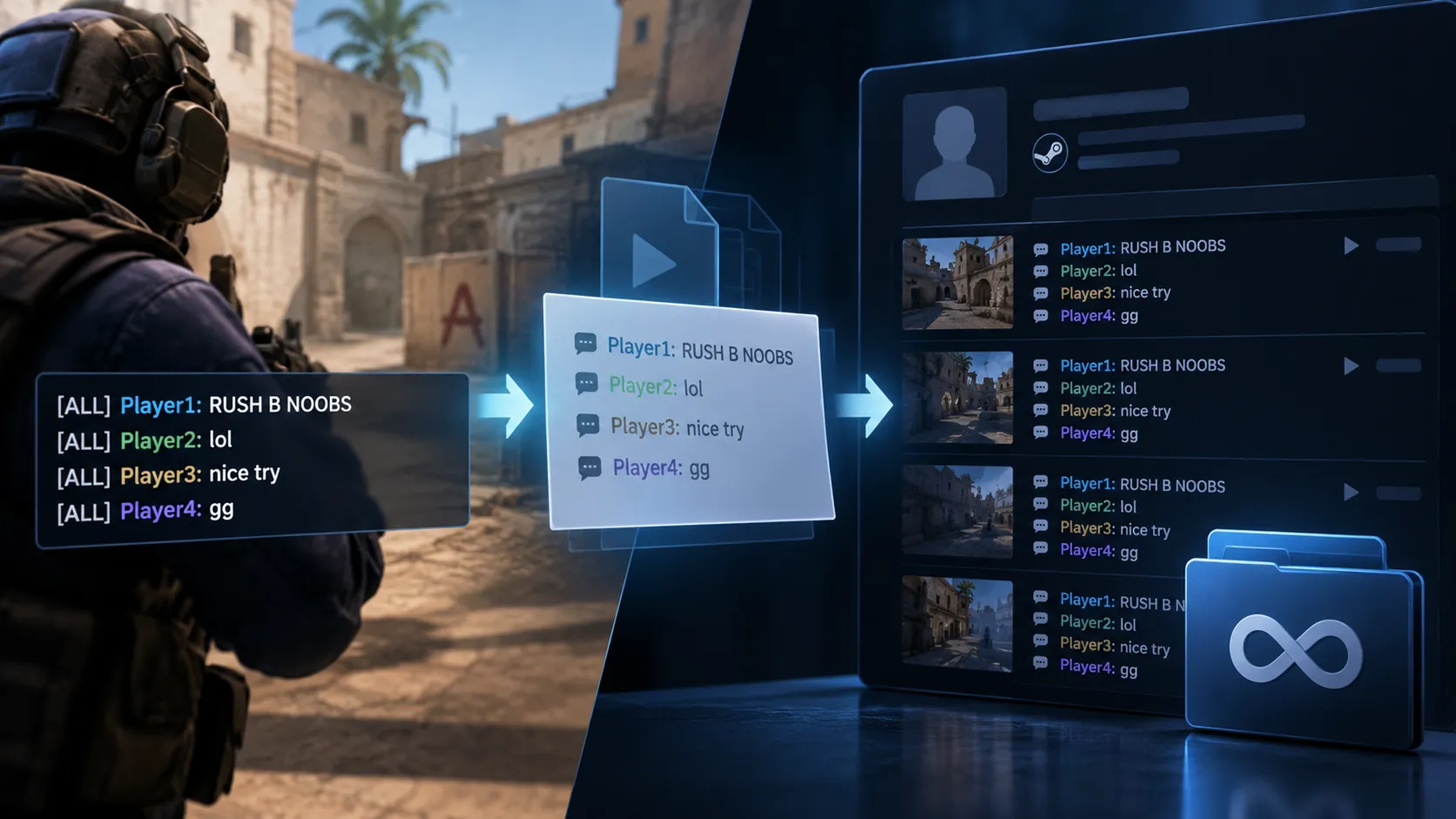
CS2's all-chat has always been visible to everyone in a lobby while a match is live. What changed in late August 2026 is what happens to those messages after the match ends, and the answer turned out to be a lot more permanent than most players expected.
What cstracker.gg Actually Did
Starting around August 27, 2026, the third-party statistics site cstracker.gg began attaching in-game chat history to public player profiles built from Steam data and processed CS2 match demos. Every CS2 match generates a demo file that Valve's client records automatically, and those demos include a full transcript of in-game chat alongside standard movement and shot data used for stats tracking. cstracker.gg's feature simply automated the process of pulling chat text out of those demos and permanently attaching it to a searchable profile page tied to a player's Steam ID, reachable by anyone who looks up that profile directly, no account or login required on either end.
The scale caught a lot of people off guard. One profile indexed by the site reportedly contained more than 2,800 messages spread across 388 separate matches, a genuinely comprehensive record of years of casual, often unguarded, in-match chatter now sitting in one permanent, publicly browsable place.
Why Streamers and Pros Got Caught Up in It
Once word spread, people naturally started looking up recognizable names, and several found their old messages circulating within hours. Legendary player Oleksandr "s1mple" Kostyliev was among the names discovered, with messages including things like "RUSH B NOOBS" spreading as lighthearted clips. Twitch streamer Ludwig Ahgren had a more complicated experience, publicly explaining context behind several of his own old messages after screenshots started circulating and users began questioning them, clarifying that one exchange came from a match he was actively streaming, and that a message referencing donations related to his moderators. His response captured the core problem well: messages that felt fleeting and low-stakes in the moment can resurface with completely stripped context once they're pulled into a permanent, searchable archive years later.
The Actual Privacy Debate
The core tension here isn't really about whether all-chat was ever private, it wasn't, anyone in the lobby could always read it live. What changed is durability and reach. A message typed in a single match used to functionally disappear once that match ended for everyone except the small group of players who happened to be in it at the time. Turning years of that chat into a permanent, indexed archive searchable by anyone, without requiring the searched player's consent or even awareness, is a meaningfully different thing than the original in-match visibility the chat was designed for. One piece of coverage specifically noted that CS2's Premier mode has pulled a much larger, more casual player base into chat-logged, ranked matchmaking than the old CS:GO ladder ever did, meaning a lot of players now have a permanent public paper trail from games they never expected to be treated as anything more than throwaway matches.
There is one natural limit on how much can be collected: Valve reportedly only retains match demo files for around 30 days, so matches older than that generally aren't available for a site like this to pull chat from going forward. That doesn't undo what's already been indexed from more recent matches, though, and players have still found extensive chat histories built up from months of relatively recent play.
What You Can Actually Do About It
cstracker.gg has published a privacy contact process allowing players to request the removal, correction, or restriction of their own profile data. If you're concerned about what might be attached to your own Steam ID, looking up your own profile on the site directly is the fastest way to see what's actually there before deciding whether to file a removal request. Beyond that specific site, the broader takeaway worth carrying forward is simply being more deliberate about what you type in a live match's all-chat going forward, treating it as genuinely public and permanent rather than something that disappears the moment the scoreboard closes.
Whether This Changes Anything for Valve
Coverage of the situation has speculated that Valve's response, if any comes, likely depends on how loudly the pro scene pushes back, given how much more exposed high-profile accounts are compared to an average Premier player grinding through casual matches. Whether that takes the form of Valve restricting third-party access to demo data, or simply leaving the current system in place while players individually request removals, hasn't been resolved as of this writing.
Keep Your Guard Up, and Your Knowledge Sharp
Stories like this are a good reminder that a lot of what feels casual inside a match can end up somewhere far more permanent than expected. If you want a part of this hobby where nothing you say or do ends up archived against your name, testing your knowledge of the game's skins, prices, and history is exactly that, and it's what the mini games on CS Guess are built for.
Head over to CS Guess, put your CS2 knowledge to the test, and enjoy a corner of this game that stays exactly as private as you'd expect.