ESL and Valve Just Banned Skin Gambling Sites From Sponsoring CS2 Teams — Here's Why
If you've watched a Tier 1 CS2 broadcast recently and noticed a jersey logo that used to be there just isn't anymore, you're not imagining it. Valve and ESL FACEIT Group have both moved to ban skin trading and skin gambling sites from sponsoring teams at the highest level of competition, cutting off a funding source that's quietly powered a huge chunk of the pro scene for years. Here's exactly what the rule says, why it's happening now, and which teams have already had to adjust.

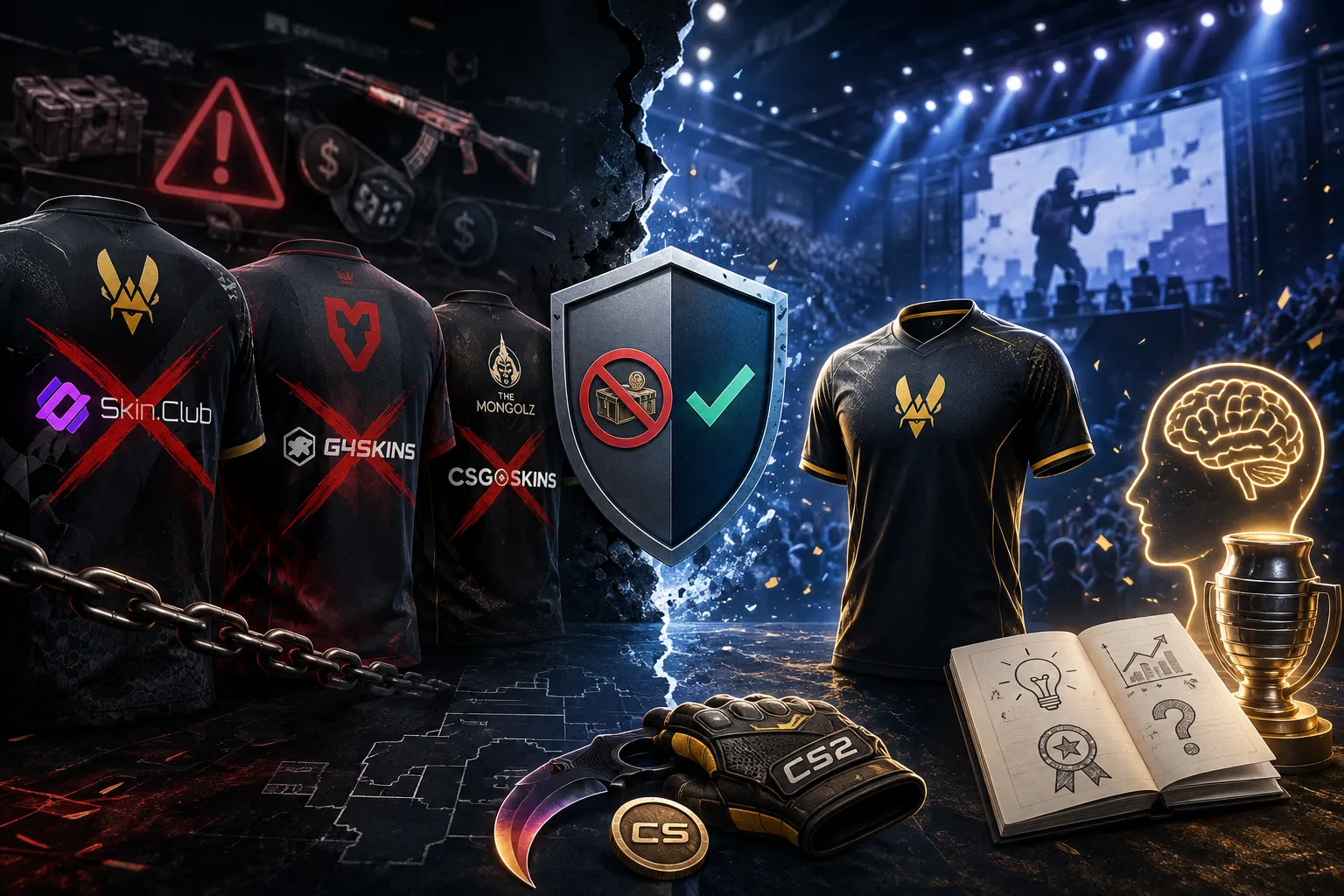
For years, if you looked closely at almost any top CS2 team's jersey, you'd find a logo for a skin trading or case-opening site somewhere on it. That's changing fast, and it's changing because of rules coming from both Valve itself and the tournament organizers running the biggest events on the calendar.
What Valve's Rule Actually Says
The foundation for all of this traces back to December 9, 2025, when Valve updated its Tournament Operation Requirements and Limited Game Tournament License, the standardized rulebook every organizer has to follow to run a licensed CS2 event. The key addition was Section 2.4.e, an IP Protection clause stating that licensees must not distribute or display, including on team jerseys or anywhere else visible during a broadcast, any content that violates Valve's IP or the Steam Subscriber Agreement, specifically naming case-opening sites and skin trading sites as examples. The same update barred tournament organizers from accepting sponsorship money from any company that generates revenue through activities relying on Valve's game economy or violating its agreements.
Two details in the wording matter more than they might seem at first. First, the restriction targets broadcast visibility specifically, jerseys, overlays, stage branding, anything a viewer would actually see during a stream, rather than banning these sponsorship relationships outright. Teams can reportedly still maintain these partnerships and promote them on their own social media, they just can't show the branding on air. Second, and just as important, the rule explicitly does not extend to ordinary cash-based gambling companies like traditional casinos or sportsbooks, since Valve's stated reasoning is that those operate with real currency and don't touch Steam item economies or violate its agreements the way skin-based platforms do. This is a rule about protecting Valve's specific game economy and IP, not a broader statement about gambling sponsorships in esports as a category.
ESL and FACEIT Fall in Line
Valve's rule initially applied at the Tier 1 level starting with events like BLAST Bounty Season 2 in 2026, but ESL FACEIT Group made it official across its own tournament ecosystem on July 7 and 8, 2026, with an updated ESL Pro Tour rulebook for the second season of the year. The new language mirrors Valve's almost directly: "Sponsors that violate Valve's IP, including companies that interact with players' Valve game inventories, are also prohibited." EFG went a step further on a practical level, adding that if a team's official branding or logo actually incorporates a now-prohibited sponsor's branding, the team has to provide an alternate version that complies with the rule for use during broadcasts.
The same rulebook update bundled in a couple of unrelated but notable changes, including a significant toughening of penalties for VAC-banned players, moving from a two-year automatic suspension from ESL competitions to five years, aligning it with the organization's standard cheating sanctions.
Which Teams Have Actually Been Affected
This isn't a hypothetical rule sitting unenforced somewhere. Several top organizations had skin-related sponsors prominently featured on their jerseys heading into this change, including Team Vitality with Skin.Club, MOUZ with G4Skins, and The MongolZ with CSGOSKINS, three teams that sat among the top five in the world at the time these rules started taking hold. Compliance started showing up on broadcasts well before the July 2026 rulebook update. NRG dropped their SkinRave branding ahead of the StarLadder Budapest Major, and Aurora removed CSFAIL's logo from their jersey around the same event. By the time BLAST Bounty Season 2 rolled around in 2026, the pattern was already established: Vitality played with Major-edition jerseys missing the Skin.Club logo from its usual position, even though Skin.Club remains a partner and still appears on the team's own social channels, just not during the actual broadcast.
Dot Esports drew a comparison worth repeating here: this is functionally similar to tobacco sponsorship bans in motorsport decades ago, where Ferrari famously kept a version of its tobacco sponsor's branding alive through the surrogate Mission Winnow campaign rather than losing the relationship entirely. The skin sponsorship situation is shaping up the same way, sponsorships surviving in a quieter, off-broadcast form rather than disappearing outright.
Why This Is Happening Now
The underlying motivation traces to sustained pressure around skin gambling's relationship with underage users. Reports and criticism aimed at Valve specifically pointed out that the tradeable skin economy powering these third-party platforms originates entirely from Valve's own games, putting real scrutiny on the company for how much responsibility it bears for what third parties built on top of that economy. Valve had already sent cease-and-desist letters to 23 separate platforms offering skin gambling using its game items before this broadcast rule took effect, and while a number of those platforms reportedly kept operating regardless, the visible sponsorship crackdown represents a more enforceable lever Valve actually controls, since it can decide what's allowed to appear at events it licenses.
The Financial Reality for Smaller Teams
The practical fallout isn't spread evenly. Top-tier organizations like Vitality and MOUZ have other significant revenue streams and sponsorship categories to lean on, making this a visible but survivable change. Smaller and mid-tier teams that leaned more heavily on skin trading and gambling sponsorships as a meaningful chunk of their operating budget are facing a tougher adjustment, and some tournaments that depended on the same category of advertiser for their own funding could feel a similar pinch. Whether that translates into real financial distress for specific organizations over the coming months is something worth watching rather than something that's already been resolved.
What This Means Going Forward
EFG has since extended similar logic beyond teams to individual content creators, with co-streaming guidelines introduced in April 2026 explicitly listing skin gambling and trading among prohibited sponsor categories creators can't display during official broadcasts, alongside categories like political advertising and alcohol. The direction of travel across both Valve and its major tournament partners looks consistent: skin-based gambling and trading platforms are being pushed further away from the visible, broadcast-facing side of competitive CS2, even where the underlying business relationships haven't disappeared entirely.
A Space That Was Never Part of This Picture
If this whole saga makes the skin gambling and trading corner of the CS2 world sound like a genuinely complicated place to be a sponsor, a team, or even a fan trying to follow the money, that reaction makes sense. CS Guess sits entirely outside that picture by design, there's no gambling, no skin deposits, and nothing here that Valve's rule was ever built to target in the first place, just mini games testing your knowledge of prices, rarity, and the culture around this game, with free perks for playing well.
Head over to CS Guess, put your CS2 knowledge to the test, and enjoy the parts of this hobby that were never tangled up in any of this in the first place.