CS2's Recurring "See Through Smoke" Bugs: Why This Keeps Happening
Smoke grenades exist to do one job. Block vision completely. Yet a handful of times since CS2 launched, some combination of settings or engine quirks has broken that promise, letting players see through smoke that should have been solid. Here's the actual pattern behind these bugs, and why one game keeps running into the exact same problem in different forms.

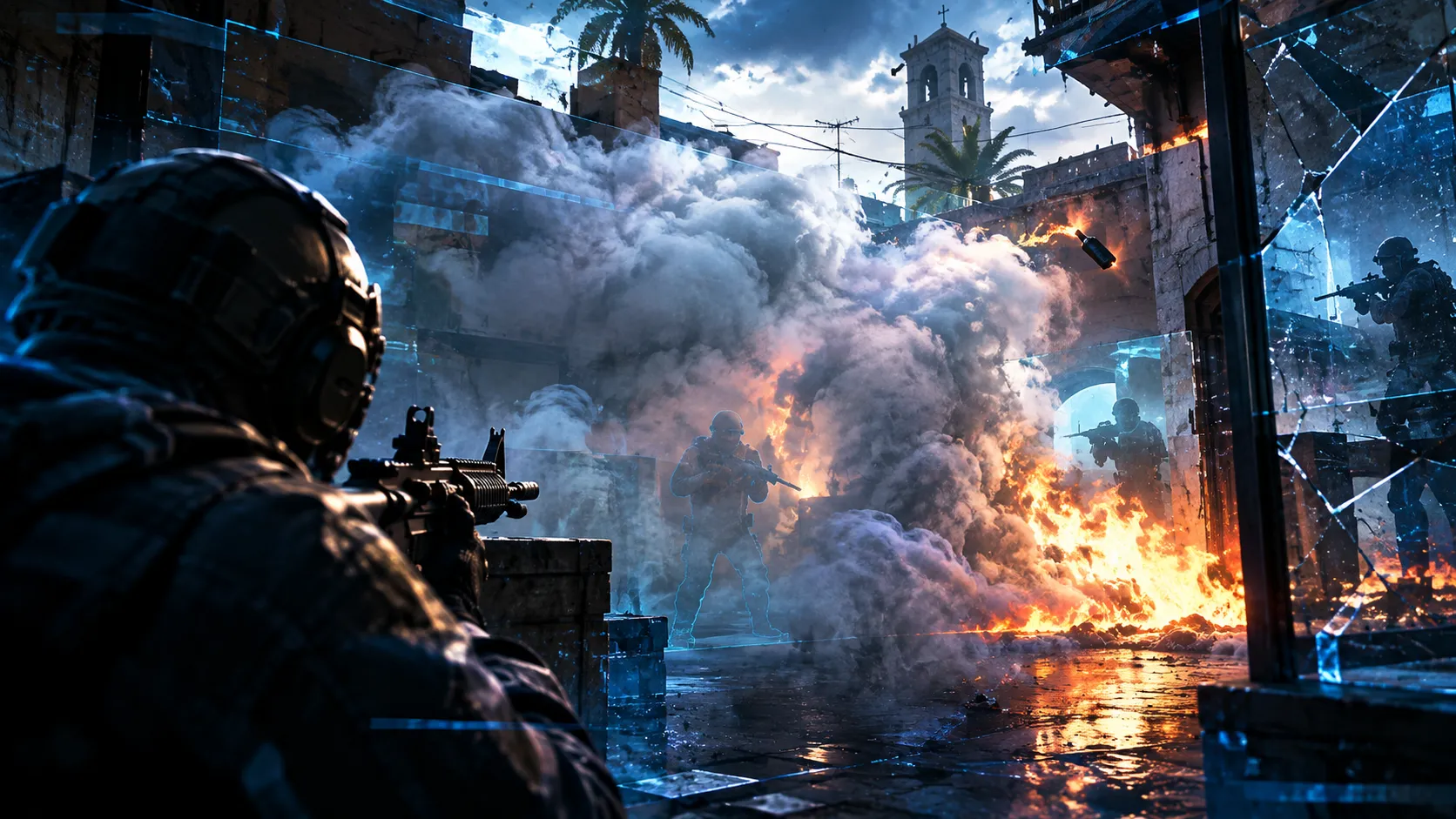
A smoke that doesn't actually block vision isn't just an annoying bug. It undermines one of the most basic tools in the entire game, which is exactly why each time this has happened, the reaction from the community has been loud and immediate.
The First Wave Came From Outside the Game Entirely
Back in December 2023, players discovered that certain graphics filters offered through NVIDIA's own driver software could be applied on top of CS2's rendering, and under specific conditions, that extra processing made objects behind smoke partially visible. This wasn't something Valve's code was doing wrong on its own. It was a third party tool reaching into how the game displayed frames and altering that output in a way nobody had designed for. Valorant had faced an almost identical problem before, and Riot's solution at the time was to block that category of driver filter from working inside their game entirely. CS2's version of this issue was quietly fixed without an explicit callout in patch notes, something community testing confirmed only after the fact.
Then a Separate Bug Hit the Radar
A few months later, in February 2024, Valve patched something related but distinct: a bug that made enemies visible on the in-game radar specifically when viewed through a combination of smoke and translucent surfaces like glass. This wasn't the same root cause as the driver filter issue. It was the game's own rendering logic getting confused by two different visual effects stacking on top of each other, which is a genuinely different category of problem even though the end result looked similar from a player's perspective.
The Molotov Problem Showed Up a Year Later
In May 2025, a new version of the same underlying issue surfaced. This time it was tied to specific anti-aliasing settings combined with fire effects from a Molotov or incendiary grenade overlapping a smoke cloud. Under those particular conditions, the smoke texture itself became noticeably translucent, letting players and their outlines show through in a way that clearly wasn't intended. Community testers traced the trigger down to a specific graphics setting within days of the bug going viral, and Valve shipped a hotfix addressing it within roughly 48 hours of the issue gaining widespread attention.
A New Variant Surfaced Again in 2026
By May 2026, reports began circulating about yet another version of this same general problem, this time tied to certain practice mode functions behaving unexpectedly when carried over into official competitive matches, effectively letting a player see information about the surrounding game state that a real match should never reveal. At the time these reports first spread, Valve's public patch notes hadn't yet confirmed a fix specifically targeting this particular issue, which understandably kept community frustration running high in the meantime.
Why the Same Category of Bug Keeps Coming Back
There's a structural reason this specific failure mode shows up more than once rather than getting permanently solved after the first fix. CS2 runs on a genuinely complex rendering pipeline where smoke, fire, lighting, and anti-aliasing all interact with each other simultaneously, and each of those systems has been individually updated and adjusted many times since launch. A change made to how fire renders for an unrelated reason can quietly interact with how smoke handles transparency in a way nobody testing that specific fire change would necessarily catch. On top of that, CS2 doesn't run a public test server the way some other competitive games do. Every update ships to the entire player base simultaneously, which means the first real stress test any patch gets is millions of live matches happening all at once, and that's often exactly when an interaction nobody anticipated finally gets discovered.
How Valve Has Generally Responded
Looking at the pattern across all of these incidents, Valve's response time has generally been fast once an issue reaches wide visibility, frequently landing a fix within days rather than weeks. What's been less consistent is public acknowledgment. Several of these fixes showed up quietly inside patches without an explicit changelog entry calling out exactly what was addressed, which is part of why community members and content creators testing patches after release have played such a consistent role in confirming when a specific issue has actually been resolved.
What This Pattern Actually Tells You
None of this means CS2's engine is fundamentally broken. Rendering complexity at this level, with dynamic smoke, dynamic fire, and dynamic lighting all interacting in real time, is genuinely difficult to fully bulletproof against every possible combination of settings and circumstances. What the pattern does show is that this specific category of bug, something rendering incorrectly in a way that reveals information smoke is supposed to hide, is more likely to recur than most other bug types, simply because of how many separate systems have to interact correctly at once for smoke to behave the way it's supposed to every single time.
Sharpen an Eye for Patterns Somewhere Else
Spotting a recurring pattern across years of separate incidents is its own kind of puzzle, and it's the same instinct that makes reading this game's economy and history genuinely interesting. If you want to put that pattern recognition to work somewhere completely different from patch notes, the mini games on CS Guess test your knowledge of prices, rarity, and this game's history, with free perks for playing well.
Head over to CS Guess and see how sharp your own read on this game really is.