Why CS2's New Spectator Flash Effect Sparked a Community Revolt
Somewhere between a routine gameplay update and a genuine broadcast crisis sits what happened during CS Asia Championships 2026. A new spectator flash effect briefly blinded viewers right along with the players on screen, and within hours a Reddit thread demanding Valve pull it before IEM Cologne had climbed to the front page.

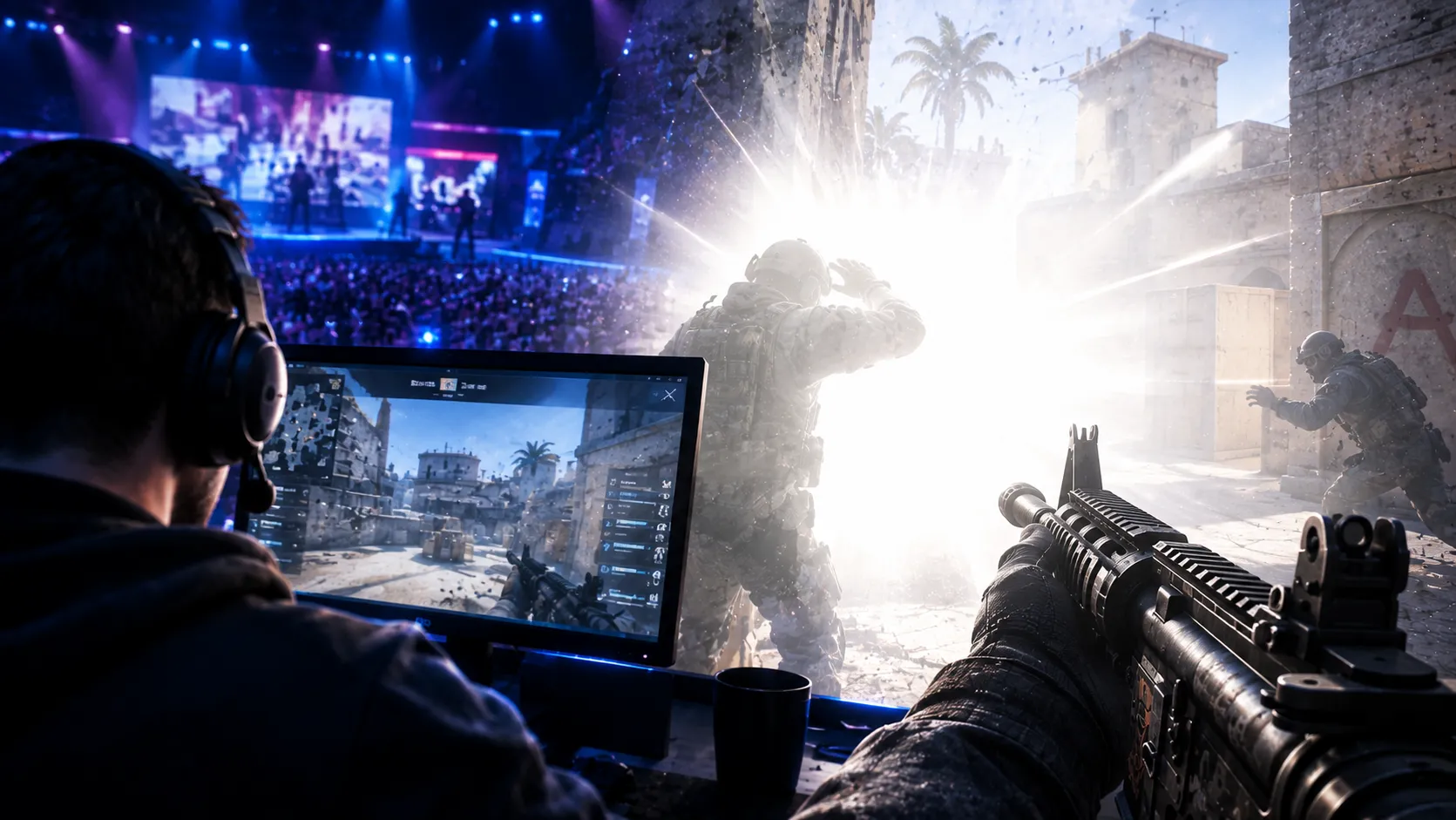
Most CS2 patches come and go without much fuss outside dedicated forums. This one didn't, and the reason it blew up says a lot about the difference between designing for a player and designing for an audience.
What Actually Changed
During CS Asia Championships 2026, viewers noticed a new flashbang effect had been added specifically for spectators, one that briefly whites out the screen for anyone watching a broadcast whenever a flashbang detonates near a player being watched, not just for the player themselves. The stated logic behind the change, as best the community could piece together, was to help casual viewers actually feel how disruptive a flash is in the moment rather than just watching a player's crosshair freeze on screen without understanding why.
How Fast the Backlash Actually Moved
A Reddit thread titled with a direct plea not to keep the effect for the upcoming IEM Cologne tournament gained hundreds of upvotes within hours of being posted. The core complaint was simple and kept repeating across the thread in slightly different words: watching a match and playing in one are different experiences, and whatever makes sense as a gameplay mechanic doesn't automatically make sense as a broadcast feature. Viewers pointed out that constantly losing visibility during exactly the moments a broadcast is trying to show, a flash setting up a site execute, a flash covering a rotation, made it genuinely harder to follow what was actually happening in a match. Some of the sharper comments called it one of the worst updates the game had shipped and openly wondered whether the people who built it had ever actually sat down to watch a professional match themselves.
The Detail That Made This Worse Than a Normal Complaint
One specific piece of the story raised the stakes considerably. The spectator flash effect appears to be built directly into the game client by Valve rather than something tournament organizers or broadcast observers control on their end. That distinction matters a great deal, because it means ESL and other organizers running events like IEM Cologne may have had genuinely limited ability to simply switch the feature off for their own broadcast, even if they wanted to. A community complaint about a gameplay choice is one thing. A complaint about a broadcast experience that the tournament running the show couldn't necessarily fix on its own is a different kind of pressure entirely, and it's part of why this spread as fast as it did.
It Wasn't a Completely One Sided Argument
A smaller portion of the community pushed back on the harshest reactions, arguing that the underlying idea had real merit. Casual viewers genuinely do struggle to understand why a player suddenly stops reacting or dies after a flash goes off if the broadcast never shows them what that player is actually experiencing in that moment. Even several of the people making that argument, though, acknowledged that whatever Valve actually shipped landed too aggressively in practice, and that a good concept executed at the wrong intensity had turned into exactly the kind of viewing disruption the harsher critics were describing.
Where Things Stood Heading Into Cologne
As the controversy grew in the lead-up to IEM Cologne 2026, Valve had not issued any public response, adjustment, or explanation, and the discussion kept building across Reddit and social media in the absence of one. That silence became its own part of the story, with players openly speculating about whether the feature would get toned down, removed outright, or simply left in place for one of the year's biggest tournaments regardless of how loudly the community objected.
What This Actually Reveals
Strip away the specific mechanic and this controversy is really about a tension that shows up constantly in live esports production: features designed around what feels authentic to a player don't automatically translate into what makes for a watchable broadcast, and the two audiences don't always want the same thing from the same moment on screen. A flash that's supposed to punish poor positioning in a firefight is a completely different experience when it's happening to someone watching from a couch with no ability to react to it at all.
Follow the Drama, Then Test Something Calmer
Community controversies like this one are part of what makes following CS2 closely genuinely interesting, even when the discourse gets heated. If you want a corner of this hobby with a lot less arguing and a lot more pure knowledge testing, the mini games on CS Guess cover prices, rarity, and this game's history, with free perks for playing well.
Head over to CS Guess and see how sharp your own read on this game really is.