Why a CS2 Pro's Screen Resolution Joke Went Viral (And Why Pros Actually Play Stretched)
During a live interview at IEM Kraków 2026, a host asked a pro player about his New Year's resolution. He answered with complete confidence, and completely missed the point of the question. The clip spread everywhere for the laugh, but the honest mix-up happened to land on a genuinely useful topic that's worth actually explaining.

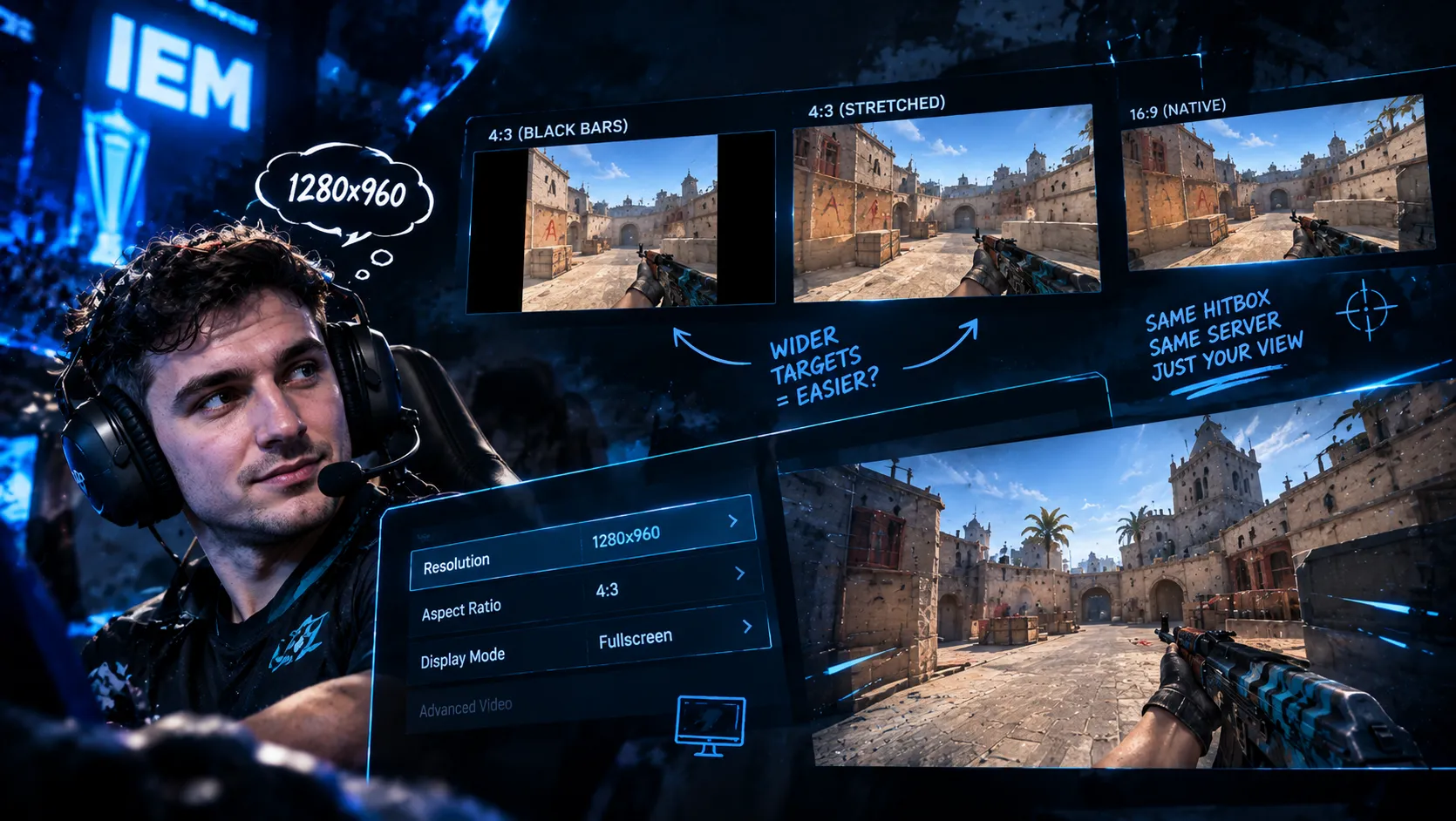
Sometimes the funniest clips in this game come from somewhere nobody expected, and this one happened to double as a genuinely useful settings lesson once you get past the joke.
What Actually Happened
After a dominant win at IEM Kraków 2026, Aurora's AWPer woxic sat down for a short post-match interview. Asked whether he had a New Year's resolution, he answered confidently and specifically, describing a preference that hadn't changed in seven years. It took a follow-up question for the mix-up to become clear. He had heard "resolution" and thought immediately of his screen resolution, the classic stretched 1280x960 setup that a huge share of competitive players still use. The exchange spread fast once clipped, with plenty of people finding the honest, no-hesitation answer funnier than any scripted joke could have been.
The Setting He Was Actually Describing
The specific resolution woxic referenced, 1280x960 played in a stretched aspect ratio, happens to be by far the most common display setup among professional players today. Across large tracked samples of pro settings, somewhere around half to sixty percent of players use exactly this configuration, and the broader 4:3 aspect ratio it belongs to still dominates the competitive scene even though most of these players own monitors and hardware perfectly capable of running native widescreen at full clarity.
Why This Setup Actually Exists
A 4:3 image can be displayed on a widescreen monitor two different ways. Black bars preserve the original proportions and fill the empty space on either side with black, which keeps everything looking correctly shaped but sacrifices horizontal field of view without gaining anything visual in return. Stretched mode instead takes that same 4:3 image and pulls it horizontally to fill the entire widescreen frame, which distorts proportions across the board, including enemy player models, making them appear noticeably wider on screen. That width increase is the entire reason stretched resolution has stuck around. A wider looking target is, at least subjectively, an easier target to land shots on, even though nothing about the underlying hitbox actually changes. The server processes hit registration exactly the same regardless of what resolution you're running. Only what you personally see on your own monitor changes.
There used to be a second, more measurable reason too. Rendering fewer pixels at a lower resolution like 1280x960 genuinely boosted frame rates back when hardware was weaker, sometimes cutting rendered pixel count by around forty percent compared to standard 1080p. On most of today's hardware, that advantage has faded considerably, since a modern GPU can usually push frames well past what a monitor's refresh rate can even display, meaning the bottleneck has shifted away from raw rendering power entirely. What's kept the format alive at this point is mostly the visual model width effect, plus a genuinely simple factor: habit. A huge number of veteran competitive players have been running this exact setup since CS 1.6 or CS:GO, and switching away from something that comfortable carries a real cost.
Why 1280x960 Specifically Wins Out
Among the various stretched options available, 1280x960 sits in a genuine sweet spot. Dropping further to something like 1024x768 saves a bit more performance but makes the image noticeably softer, to the point where reading distant details or fine utility placement gets meaningfully harder. Staying closer to native with something like 1440x1080 keeps more clarity but loses much of the widening effect that made stretched resolution appealing in the first place. 1280x960 threads that needle closely enough that it's become the default reference point almost anyone testing a stretched setup starts from.
The Catch If You're Thinking About Switching
None of this is a secret performance unlock waiting to be discovered, and every serious breakdown of the topic says roughly the same thing. The competitive edge here is marginal at best, and it comes with a real cost if you're already comfortable at a different resolution. Adjusting your muscle memory to a new aspect ratio typically takes one to two weeks in a best case scenario, and returning to your previous comfort level can take up to a month. If you've logged hundreds of hours getting used to how your current setup feels, that adjustment period is a real trade-off worth weighing against however marginal the visual benefit turns out to be for you personally.
Even a Joke Can Teach You Something
A pro instinctively answering with his monitor setup instead of an actual resolution says a lot about how deeply ingrained these settings choices become over a career, and it's a good reminder that the small technical details behind a setup are usually more interesting than they first appear.
Sharpen a Different Kind of Instinct
Instant, confident answers built on years of familiarity aren't unique to settings choices. That same kind of sharp, practiced instinct is exactly what the mini games on CS Guess are built to test, covering this game's prices, rarity, and history, with free perks for playing well.
Head over to CS Guess and see how quick your own instincts really are.