CS2 Anti-Cheat and VAC Bans: What Actually Gets You Banned and How Appeals Work
Search "can I appeal my VAC ban" and you'll find years of Steam forum threads from players pleading their case, some banned for a matter of days, some for over seven years. The answer given to nearly every single one of them is the same, and it's worth understanding exactly why before you ever find yourself typing that question.

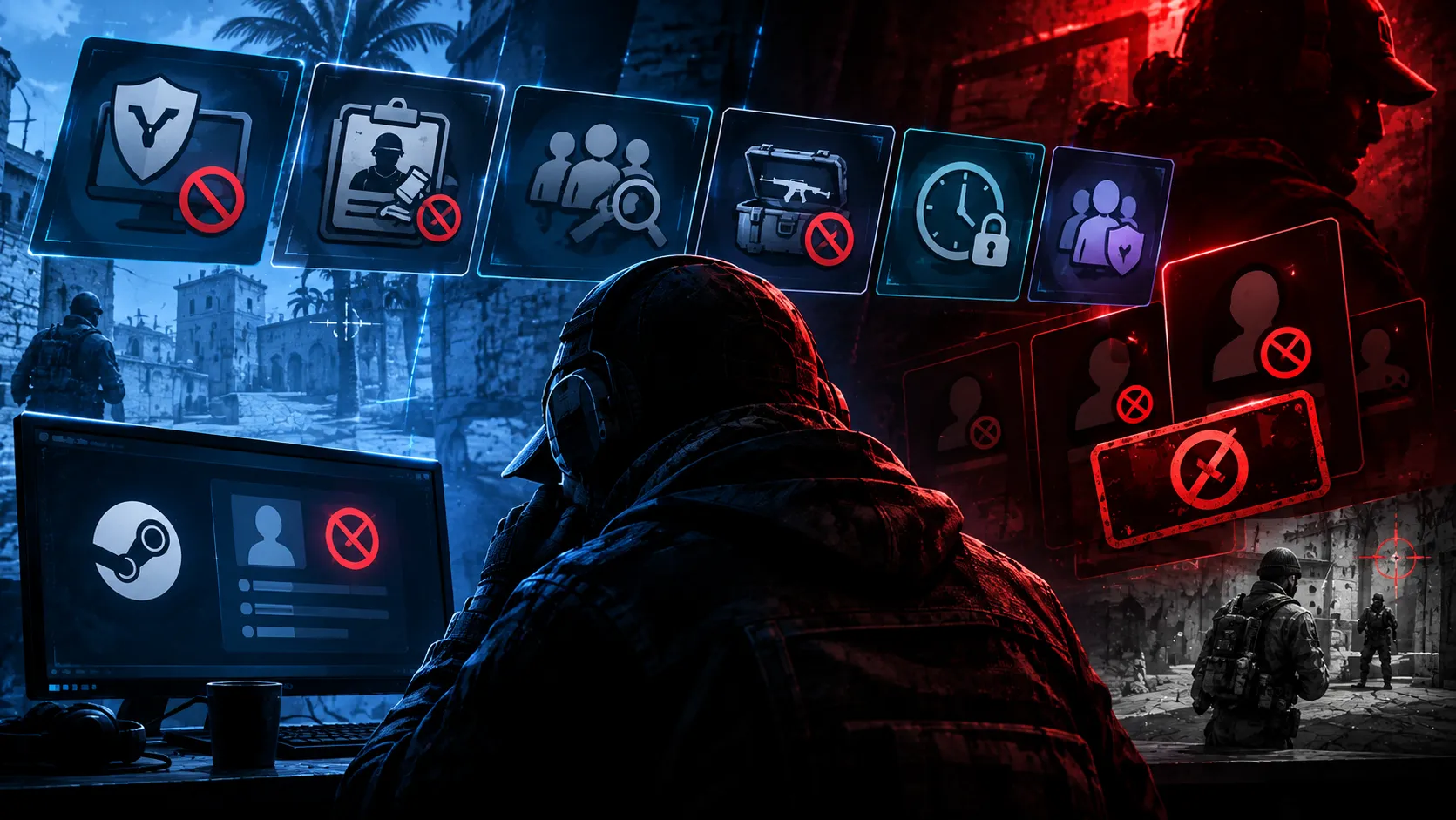
Counter-Strike's ban system looks simple from the outside: cheat, get caught, get banned. In practice there are several genuinely different systems doing the banning, each with its own rules about what triggers it and whether anything can be done afterward.
VAC Bans Are the Strictest of All
A VAC ban comes from Valve Anti-Cheat, an automated system that scans for known cheat signatures while your account connects to VAC-secured servers. When it flags something, the ban that follows is permanent by design, and Steam Support will not remove it under any circumstances through a normal appeal. There's no thirty-day waiting period, no ticket you can file that gets a human to reconsider your case, and no amount of match history or clean gameplay evidence changes the outcome once the ban has landed. Valve's own support documentation states this outright, and the pattern shows up constantly in Steam community discussions, where players banned anywhere from a few days to multiple years all get told the exact same thing.
There are exactly two situations where a VAC ban actually gets lifted, and neither one involves you submitting a request. The first is if Valve itself later discovers that a detection signature caused false positives, in which case they reverse the affected bans on their own initiative without anyone applying for it. The second applies if your account was compromised before the ban was issued and you can prove someone else was responsible, which is a narrow case handled as an account security issue rather than a traditional appeal.
Game Bans Work Almost Identically
CS2 also issues game bans, which come from Valve's own enforcement systems, including convictions through the Overwatch review process, rather than the VAC signature engine itself. For a player caught cheating, a game ban and a VAC ban produce essentially the same real-world outcome: that account is finished in matchmaking, permanently. The two show up separately on a Steam profile, but functionally they mean the same thing to the person holding the account.
Overwatch Bans Are the Human Layer
Where VAC works through pure automated detection, Overwatch adds a layer of actual human judgment. When a player gets reported, the case gets routed to a pool of experienced players Valve selected as investigators, who review demo clips of the reported match and vote on whether a genuine violation occurred. If enough investigators agree, the ban gets applied. Overwatch bans split into two categories with different consequences. A Minor ban, typically issued for griefing like intentionally sabotaging rounds or abusing voice chat, runs for thirty days on a first offense, but a second Minor conviction becomes permanent. A Major ban, reserved for cheating, is permanent from the very first offense. Both types are treated as final once issued, since the system relies on multiple independent reviewers reaching agreement rather than a single automated flag, and Valve's position is that this reduces the odds of a wrongful ban to begin with.
Community Bans and Cooldowns Are a Different Animal Entirely
Not every restriction in CS2 relates to cheating at all. Community bans specifically limit trading and marketplace access rather than matchmaking itself, and their length actually scales with repeat offenses, typically somewhere around one to seven days for a first violation, seven to thirty days for a second, with permanent restrictions reserved for repeated cases. Cooldowns sit even further from the cheating conversation. These are short, escalating matchmaking timeouts triggered by things like abandoning matches or racking up excessive reports, generally starting around thirty minutes and climbing to two hours, then twenty four hours, and beyond with repeated infractions. Neither of these categories touches your VAC or game ban status, and neither one is permanent by default the way a cheating conviction is.
Trust Factor Quietly Sits Behind All of This
Separate from any specific ban type, CS2 runs an invisible reputation system generally referred to as Trust Factor, which influences who you actually get matched with. An account with a clean history and no reports tends to land in lobbies with similarly clean accounts, while an account carrying reports, cooldowns, or a history of bad behavior gets grouped differently. It isn't a ban in any formal sense, and Valve has never published the exact mechanics of how it's calculated, but it functions as a quiet, ongoing consequence layered underneath the more visible ban categories.
Why the Permanence Is So Absolute
Reading through years of Steam forum threads on this topic, the same pattern repeats constantly. A player explains their situation, sometimes convincingly, sometimes years after the fact, and the community response is almost always identical: permanent means permanent, and no combination of time passed, apologies offered, or claimed innocence changes that. Valve's reasoning, as far as it's been made public, comes down to consistency at scale. A system that entertained appeals for millions of accounts, weighing each individual's claim of innocence, would be both enormously resource intensive and far more exploitable than one with a hard, unmovable line. Whether that tradeoff feels fair to any individual banned account is a separate question from whether the policy is exactly what Valve says it is, which it consistently has been.
What This Actually Means If You're Worried About One
If you've been banned and are wondering whether there's a path back, the honest answer based on everything Valve has stated and everything the community has documented over years of these threads is no, not through a request you submit yourself. The only paths that exist involve Valve correcting its own detection error or a proven case of account compromise, and neither of those is something you can trigger by writing a compelling appeal. Understanding which category of ban you're actually dealing with at least clarifies what you're looking at, even when the answer isn't the one you were hoping for.
Play Somewhere the Rules Are Refreshingly Simple
If ban systems and appeal policies make competitive CS2 sound more like a legal document than a game, that reaction is fair. If you want a corner of this hobby where nothing you do can get flagged, reported, or reviewed, testing your knowledge of the game's skins, prices, and history is exactly that, and it's what the mini games on CS Guess are built for, with free perks for playing well.
Head over to CS Guess and enjoy a game where the only judge is what you actually know.