Valve Just Patched a Year-Long CS2 Anti-Cheat Bypass. Here's What VACnet Actually Caught
For more than a year, a specific category of cheat client had a way to keep its behavior from ever reaching Valve's AI-driven anti-cheat pipeline in the first place. On July 29, 2026, Valve quietly closed that gap, and bans started landing within the first rounds players played afterward. Here's what actually happened, without a technical walkthrough of the exploit itself.

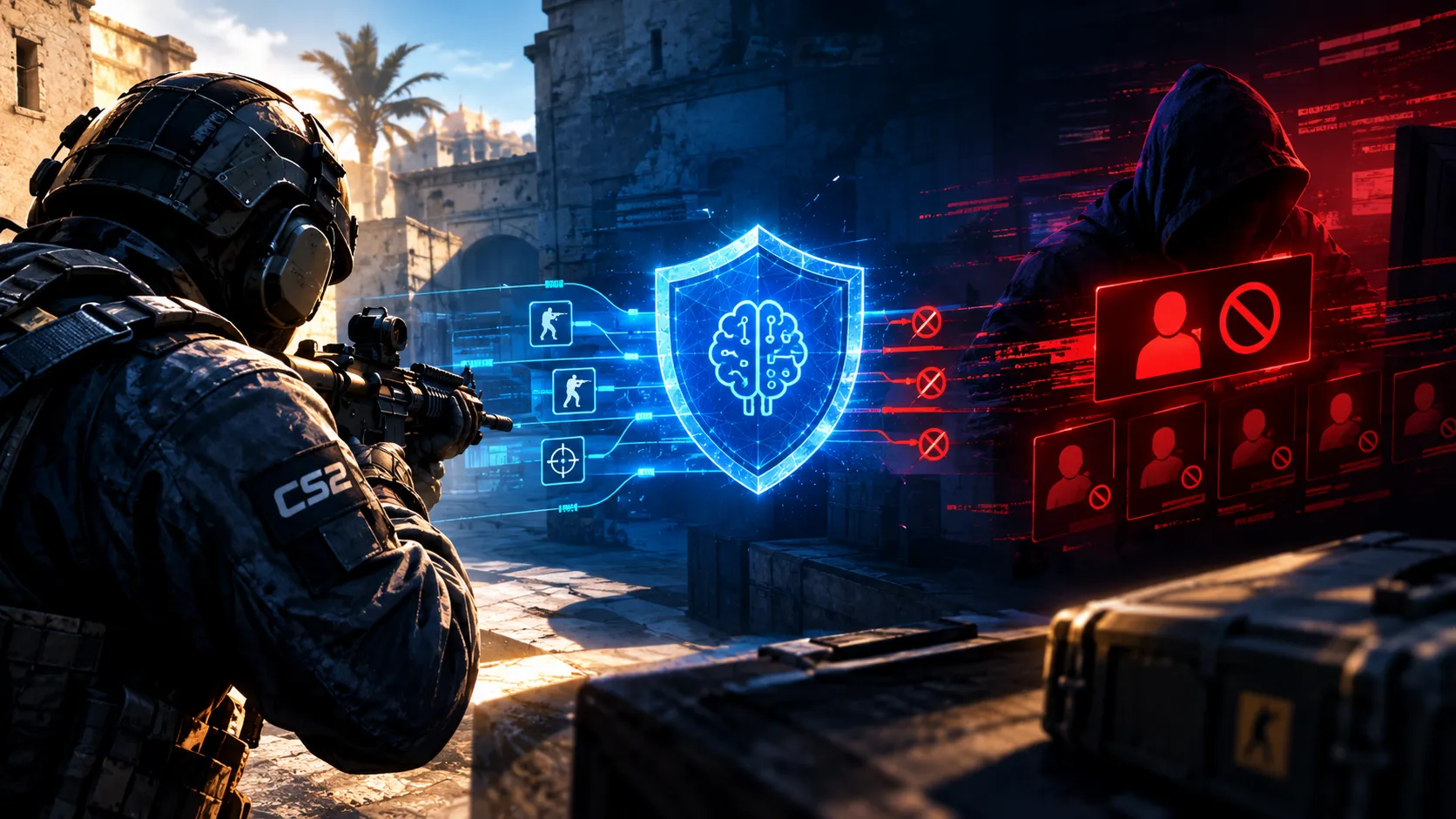
Most anti-cheat news comes in the form of ban wave announcements after the fact. This story is a little different, because Valve was unusually candid about the specific mechanism it fixed, even while stopping well short of explaining exactly how the exploit worked.
What Valve Actually Fixed
On July 29, 2026, Valve shipped a CS2 patch closing a flaw in VACnet, the game's server-side, AI-driven anti-cheat system. According to Valve's own patch notes, the fix addressed a bug that had allowed malicious players to avoid being processed by VACnet entirely. In practical terms, certain cheat clients had found a way to prevent their in-match behavior from ever reaching the pipeline VACnet uses to analyze and flag suspicious play, effectively operating outside the system's field of view rather than trying to fool it once inside. That's a meaningfully different problem than a cheat that simply evades detection while still being scanned, and it's part of why this specific fix drew so much attention once the details became clear.
Why This Was Unusually Candid for Valve
Valve has historically kept the inner workings of its anti-cheat systems deliberately vague, for the obvious reason that detailed disclosure tends to help cheat developers more than it helps players. Describing this fix explicitly as closing a gap that let players avoid VACnet processing entirely, without detailing the specific technical method involved, was a rare moment of Valve being specific about what a patch actually addressed rather than issuing a generic bug-fix note. That's exactly why this piece isn't walking through the mechanics of how the bypass worked, reporting that a gap existed and was closed is different from providing a technical breakdown that could help someone exploit a similar issue elsewhere.
Why Bans Started Landing Immediately
One of the most telling details to come out of this patch is how quickly enforcement followed it. Reports indicated that players using rage-hack style cheats began receiving bans within their very first rounds of play once the patch went live, a turnaround fast enough to suggest VACnet had already flagged a substantial backlog of accounts well before the patch shipped, accounts whose flagged data simply hadn't been fully processed while the bypass was active. Closing the gap appears to have let that backlog clear essentially all at once, rather than Valve needing to build new detection from scratch.
The Broader Shift in How Valve Talks About VACnet
A separate but related detail is worth noting here: ban notifications issued after this patch have reportedly started specifically naming VACnet as the enforcement mechanism, rather than displaying the generic VAC ban message players have seen for years. That's consistent with a gradual shift documented since at least May 2026, where Valve appears to be moving VACnet from a background component feeding into the broader VAC system toward a more visible, named part of how bans actually get communicated to players. It's a small change in presentation, but it signals Valve treating VACnet as a system worth being transparent about by name, not just as an internal tool.
Why "Better" Doesn't Mean "Solved"
It's worth being realistic about what this patch does and doesn't represent. The history of anti-cheat in Counter-Strike, and in competitive gaming generally, is a history of temporary advantages rather than permanent solutions. Valve closed a specific bypass that cheat vendors had been relying on for over a year, and the competitive environment is genuinely better as a result, at least in the near term. But cheat developers respond to patches like this by rewriting their tools to find the next gap, not by giving up, and there's no reason to expect this specific fix to be the last word on this category of cheat. A cleaner detection pipeline and a cleared backlog are genuinely good news, but they're a checkpoint in an ongoing back-and-forth, not a finish line.
What This Means for the Average Player
If you've noticed matches feeling cleaner since late July, this patch is likely at least part of the reason why, particularly if you'd been running into rage-hack-style cheaters with any regularity before. It's also a reasonable moment to recalibrate expectations: the specific bypass that let a category of cheat operate invisibly for over a year is gone, but treating any single patch as the permanent end of cheating in a competitive shooter has never held up historically, and this one is unlikely to be the exception.
Keep Your Edge Somewhere the Playing Field Is Actually Level
Following how anti-cheat systems evolve is part of what makes staying invested in CS2's competitive integrity genuinely interesting. If you want to sharpen a different kind of edge, one based purely on knowledge rather than detection systems and patch cycles, that's exactly what the mini games on CS Guess are built for, testing your read on prices, rarity, and the game's history, with free perks for playing well.
Head over to CS Guess, put your CS2 knowledge to the test, and enjoy a part of this hobby where the only advantage that matters is what you actually know.