Is CS2 Full of Cheaters in 2026? The Real Situation Explained
Cheating has been one of the most controversial topics in Counter-Strike for years. While Valve introduced VAC Live and continued improving CS2, many players still question whether competitive matches can truly be trusted. Here's an honest look at the current state of cheating in CS2 and whether the problem is as bad as the community believes.

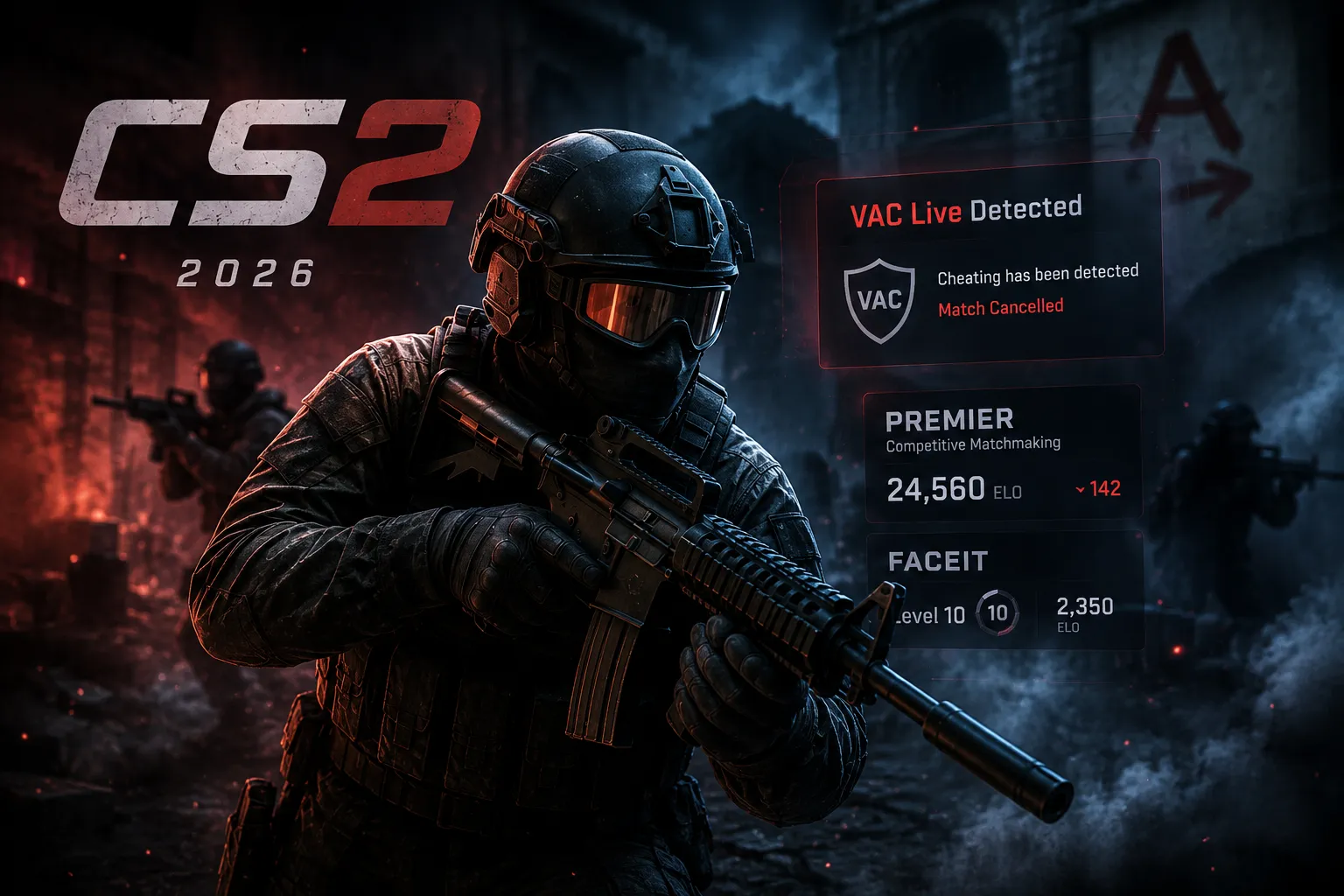
Ask ten Counter-Strike players whether CS2 is full of cheaters, and you'll probably get ten different answers.
Some players will tell you that every other match contains someone suspicious. Others will insist that cheating is massively exaggerated and that most accusations come from frustrated players looking for excuses after a loss. Somewhere between those two opinions lies the truth.
The reality is that cheating remains one of the most discussed topics in Counter-Strike 2. It affects how players perceive matchmaking, how much trust they place in the ranking system, and ultimately whether they continue playing Premier or move to third-party platforms such as FACEIT.
But is the situation really as bad as social media makes it seem?
Let's take a closer look.
Why Cheating Feels Worse Than It Actually Is
One of the biggest challenges facing Counter-Strike isn't necessarily the number of cheaters. It's the fact that players often cannot tell the difference between a highly skilled player and someone using unfair advantages.
CS2 is a game with an extremely high skill ceiling. Experienced players can have near-perfect crosshair placement, incredible map awareness, and reaction times that look impossible to newer players.
When someone gets instantly headshotted three rounds in a row, the first reaction is often:
"That guy must be cheating."
Sometimes they're right.
Most of the time, however, they're simply facing someone who has thousands of hours of experience.
The problem is that uncertainty creates doubt. And doubt spreads quickly.
A single suspicious moment can make players question an entire match.
VAC Live: Valve's Biggest Weapon Against Cheaters
When Valve introduced VAC Live, expectations were enormous.
For years, players had demanded stronger anti-cheat measures. VAC Live represented a significant shift from traditional anti-cheat systems by allowing suspicious matches to be cancelled in real time when cheating is detected.
The concept was simple: if a player is caught cheating during a match, the match can be terminated immediately.
This was a major step forward compared to previous systems where bans could occur weeks or even months later.
The introduction of VAC Live sent a clear message that Valve understood the concerns of competitive players and was willing to invest in preserving the integrity of the game.
However, no anti-cheat system is perfect.
While VAC Live has undoubtedly improved the situation, many players still report encountering suspicious accounts and questionable gameplay. Whether those reports represent actual cheating or simply perception is often difficult to determine.
Premier Matchmaking and the Trust Problem
The biggest issue facing Premier in 2026 may not actually be cheating.
It may be trust.
Many players no longer judge a match solely based on whether a cheater is present. Instead, they ask a broader question:
"Can I trust that this match is fair?"
When players encounter low-hour accounts, unusually strong opponents, or inconsistent matchmaking experiences, confidence in the system begins to decline.
Even if no cheating is occurring, the feeling that something is wrong can be just as damaging.
This is why discussions about cheating remain so dominant within the community. They are often symptoms of a larger concern regarding competitive integrity.
Players want to know that their rank reflects their skill and that every victory or defeat is earned fairly.
Why FACEIT Still Feels Different
This is one of the main reasons many competitive players continue to prefer FACEIT.
FACEIT is not magically free of cheaters. No competitive platform is.
The difference is that FACEIT creates a stronger perception of security through stricter anti-cheat measures, account verification systems, and a more dedicated competitive environment.
Players generally feel that opponents have more to lose and therefore are less likely to risk cheating.
As a result, even when suspicious situations occur, players tend to trust the platform more.
Trust is one of the most valuable resources in competitive gaming, and FACEIT has spent years building it.
The Hidden Impact of Cheating on the Community
The effects of cheating extend far beyond individual matches.
When players believe that cheating is widespread, several things happen:
Competitive rankings lose value.
Players become more toxic toward one another.
Legitimate skilled players are accused unfairly.
New players become discouraged from improving.
The overall reputation of the game suffers.
This is why anti-cheat efforts matter so much. It's not just about removing bad actors. It's about maintaining confidence in the competitive ecosystem.
A healthy competitive environment requires players to believe that skill is the deciding factor.
Without that belief, even the best ranking systems begin to lose meaning.
Is CS2 Actually Full of Cheaters?
The honest answer is no.
CS2 is not "full of cheaters."
However, cheating remains a visible and important problem that continues to influence player behavior and community discussions.
The average player is unlikely to encounter a cheater in every match. Yet because cheating incidents tend to be memorable, they leave a lasting impression.
People rarely remember the dozens of fair games they played last week.
They always remember the one suspicious match that ruined their evening.
This creates a perception gap where cheating feels more common than it actually is.
That doesn't mean the problem should be ignored. It simply means the conversation is often more nuanced than social media headlines suggest.
What Happens Next?
The future of competitive CS2 depends heavily on trust.
Valve will continue refining VAC Live and improving Premier matchmaking. Third-party platforms such as FACEIT will continue competing by offering stricter competitive environments.
Ultimately, the platform that provides the most trustworthy experience will win the loyalty of serious players.
For now, CS2 is in a better position than many critics admit.
Cheating has not disappeared.
But neither has Valve's commitment to fighting it.
And for millions of players logging in every day, that's reason enough to remain optimistic about the future of Counter-Strike 2.