Why Competitive Players Are Leaving CS2 Premier in 2026
CS2 Premier was supposed to become the future of competitive Counter-Strike. Instead, many serious players are returning to FACEIT and third-party platforms. From cheating frustrations to trust system problems, here’s why the competitive community is losing confidence in Premier — and what the future of anti-cheat may look like.

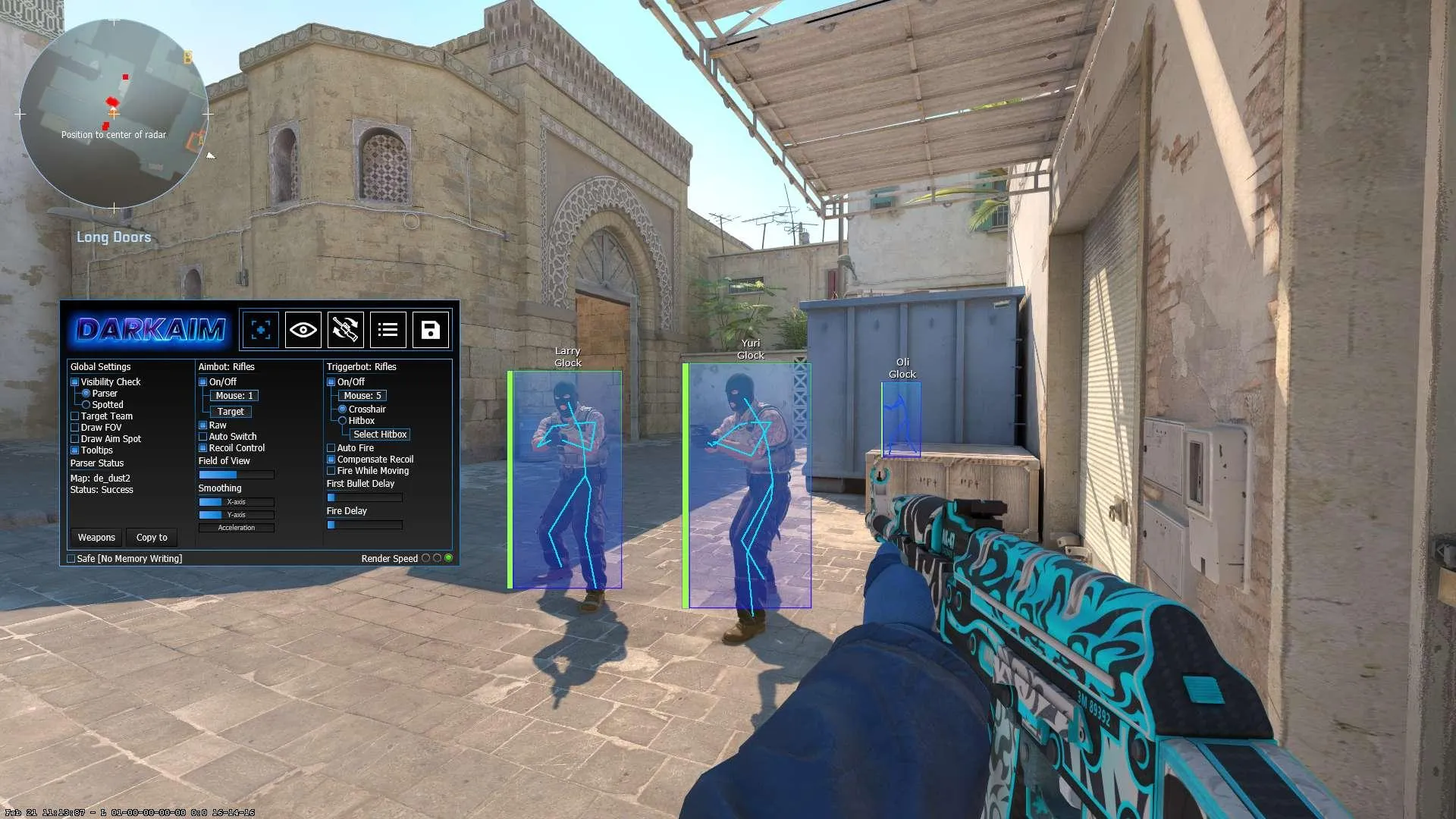
When Valve introduced Premier mode in Counter-Strike 2, many players believed the future of competitive matchmaking had finally arrived.
The expectations were massive.
Premier was supposed to become:
- the official competitive ecosystem for serious players
- the answer to FACEIT and third-party matchmaking
- a modern ranking system for esports-focused competition
- a cleaner and more trustworthy environment
- a long-term evolution of CS ranked play
For a moment, the excitement across the CS community was real.
Players imagined a future where:
- global rankings actually mattered
- anti-cheat systems improved dramatically
- competitive progression felt meaningful again
- cheating became less common
- high-level matchmaking felt fair and rewarding
But in 2026, reality looks very different.
Instead of fully replacing third-party platforms, Premier has created one of the most divided competitive environments Counter-Strike has seen in years.
Many serious players are now returning to FACEIT or avoiding Premier entirely.
And the reason goes much deeper than simply “too many cheaters.”
The real issue is something even more dangerous for a competitive game:
Players are losing trust in the system itself.
The Competitive Integrity Problem Nobody Wants to Ignore
Counter-Strike has always had cheaters.
That alone is not new.
What makes CS2 different is how frequently players feel uncertain about the legitimacy of their matches.
In previous eras of CS, players usually knew the difference between:
- getting outplayed
- getting unlucky
- and playing against an obvious cheater
In CS2 Premier, many players feel stuck in a constant gray area where every suspicious moment creates doubt.
And that doubt changes everything.
A single questionable round can completely alter how players experience an entire match.
Suddenly every prefire looks suspicious.Every smoke spam feels unnatural.Every perfect timing starts looking impossible.
Players constantly ask themselves:
- Was that legit?
- Was he walling?
- Is this another smurf?
- Why is this account brand new?
- How does this player already know every rotation?
- Why does every suspicious player have low hours?
Over time, this creates a psychological problem larger than cheating itself.
The competitive experience stops feeling trustworthy.
And once that happens, ranked progression loses meaning.
Why Premier Initially Had So Much Potential
On paper, Premier still looks like the perfect competitive system.
Valve introduced several features players had wanted for years:
- visible global rankings
- map veto systems
- seasonal resets
- improved competitive structure
- modernized UI
- VAC Live integration
- more esports-style matchmaking
The ranking system itself was a huge step forward compared to older CS:GO matchmaking.
For the first time, many casual and semi-competitive players felt motivated to grind ranked seriously again.
The early months of CS2 Premier generated enormous hype:
- streamers pushed rank grinding
- players competed for leaderboard spots
- communities tracked rating progression
- competitive content exploded on YouTube and Twitch
For a while, Premier felt fresh.
But the honeymoon phase didn’t last.
VAC Live Was Supposed to Change Everything
One of the biggest marketing points behind Premier was VAC Live.
The idea sounded revolutionary:
- detect cheaters live
- instantly cancel matches
- reduce damage to legitimate players
- modernize anti-cheat technology
- create visible trust in the system
For a community frustrated with cheating for years, this sounded like exactly what Counter-Strike needed.
And to be fair, VAC Live did create improvements.
But it also created expectations that may have been impossible to fully satisfy.
The problem today is not necessarily that VAC Live completely failed.
The problem is that players still don’t feel consistently protected.
And perception matters enormously in competitive gaming.
Competitive players don’t judge anti-cheat systems based on technical presentations or marketing videos.
They judge them based on:
- how often matches feel suspicious
- how many questionable accounts they encounter
- whether ranked games feel legitimate
- whether progression feels fair
Right now, many players still report:
- suspicious low-hour accounts
- obvious smurfs
- inconsistent ban waves
- questionable matchmaking quality
- repeat suspicious players
- matches that feel impossible to trust
Even if some of those accusations are exaggerated, the damage is already done psychologically.
Because competitive integrity depends heavily on confidence.
Once players stop believing the system protects fair play, frustration spreads extremely quickly through the community.
Why FACEIT Still Feels More Legitimate
Despite years of criticism, FACEIT still remains the preferred environment for many serious competitive players.
That alone says something important.
Most players don’t necessarily love FACEIT because the platform is perfect.
They prefer it because the environment feels more controlled.
FACEIT invested heavily into systems competitive players care about:
- stronger anti-cheat enforcement
- verification systems
- higher trust matchmaking
- reputation-based ecosystems
- moderation layers
- competitive identity progression
The result is psychological as much as technical.
Matches simply feel more legitimate.
That perception becomes incredibly valuable once trust in official matchmaking begins declining.
Even players frustrated with FACEIT’s toxicity or grind often admit:
- suspicious matches feel less common
- high-ELO games feel more serious
- players appear more invested in winning fairly
- the environment feels more competitive overall
And for serious players, that difference matters enormously.
Smurfing Is Quietly Damaging Competitive Matchmaking
One topic often overshadowed by cheating discussions is smurfing.
But many players argue smurfing damages competitive integrity almost as much as cheating itself.
When highly skilled players repeatedly enter lower-ranked matches:
- progression stops feeling fair
- new players become frustrated
- ranked balance collapses
- legitimate improvement becomes harder to measure
CS2 Premier currently struggles with several issues that amplify smurfing frustration:
- free account accessibility
- weak account identity systems
- limited verification layers
- easy account creation
- inconsistent trust perception
For many players, it becomes difficult to tell the difference between:
- a smurf
- a cheater
- or an extremely skilled player
That uncertainty again damages trust in matchmaking.
The Real Future of Anti-Cheat May Be AI
Traditional anti-cheat systems mainly focus on direct detection:
- cheat signatures
- memory scanning
- software behavior
- known exploit patterns
But cheating technology is evolving rapidly.
Modern cheats increasingly attempt to imitate legitimate human behavior.
This is why many experts believe the future of anti-cheat may depend more heavily on behavioral analysis and AI-driven trust systems.
Instead of only asking:“Is cheat software running?”
Future systems analyze:
- unnatural reaction timing
- impossible consistency
- suspicious aim behavior
- abnormal information usage
- impossible tracking patterns
- movement anomalies
- long-term gameplay statistics
Combined with:
- account trust scores
- hardware reputation
- player history
- replay analysis
- social behavior
- matchmaking patterns
…AI systems may eventually create far stronger competitive integrity ecosystems.
The biggest shift is philosophical.
Players no longer only want faster bans.
They want suspicious players filtered away before matches are ruined in the first place.
Competitive Players Want Trusted Ecosystems
Modern competitive players expect much more than simple ranked matchmaking.
They increasingly want:
- verified players
- reputation systems
- transparent trust indicators
- cleaner queues
- anti-smurf protection
- meaningful progression
- fair competitive environments
This is one reason why third-party ecosystems continue growing despite official matchmaking improvements.
Convenience alone is no longer enough.
Players are willing to install anti-cheat software, verify accounts, and join external platforms if it means matches feel more trustworthy.
That says a lot about the current state of competitive CS2.
Why This Matters for the Future of Counter-Strike
Counter-Strike remains one of the most competitive and respected esports in gaming history.
The demand for serious skill-based competition has never disappeared.
In fact, it continues growing.
But the expectations around competitive ecosystems are evolving rapidly.
Modern players no longer judge platforms only by:
- graphics
- servers
- ranking systems
- or UI design
They judge platforms by trust.
The future winners in competitive FPS gaming will likely combine:
- AI-assisted anti-cheat
- verified matchmaking
- behavioral trust systems
- reputation-based queues
- smarter matchmaking
- community moderation
- progression identity
Because the future of competitive Counter-Strike is not only about stopping cheaters faster.
It’s about rebuilding player confidence in the competitive experience itself.
Final Thoughts
CS2 Premier still has enormous potential.
Valve clearly wants Premier to become the future of official competitive Counter-Strike.
But the current community frustration shows something important:
Competitive players no longer only want matchmaking.
They want:
- trusted ecosystems
- transparent competitive environments
- verified progression
- fair games
- reputation systems
- confidence in the matches they play
And whichever platform solves that problem best may ultimately define the future of competitive Counter-Strike.