CS2's VAC Live Match-Cancellation Exploit: What Happened and How Valve Fixed It
A feature built specifically to protect players from cheaters briefly became something players could turn against each other instead. A reported CS2 exploit let someone fake their own banned status and cancel an entire match on command. Here's what the bug actually did, and why the first wave of coverage describing it got an important detail backwards.

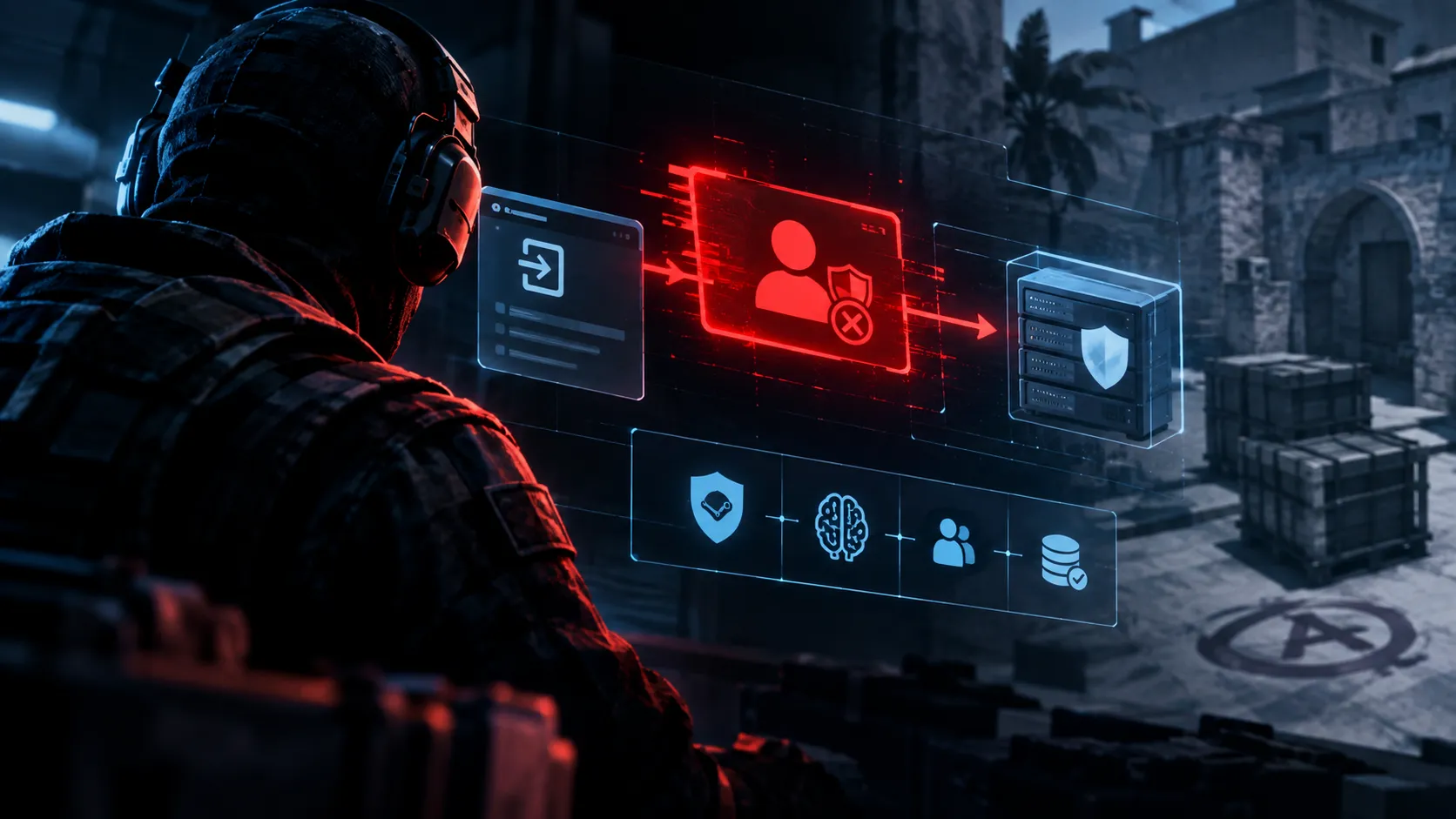
Anti-cheat systems exist to catch bad actors, which makes it especially frustrating when a flaw in that same system becomes a tool bad actors can point at everyone else instead.
What VAC Live Is Actually Supposed to Do
VAC Live is the part of Valve's anti-cheat stack built to catch a cheater mid-match and end the game immediately, specifically so legitimate players don't have to sit through a match they have no real chance of winning or lose competitive rating over it. It sits alongside the rest of Valve's defensive layers, signature based detection, behavioral analysis through VACnet, Trust Factor based account history, and server side validation checks, each covering a different piece of the overall anti-cheat picture. VAC Live's specific job is real time intervention once a cheating incident is actually detected during a live game.
What the Reported Exploit Actually Did
In early September 2026, a security researcher reported a vulnerability that let a player fake their own account state to appear as though it had just been VAC banned, even though no real ban had occurred. Once that fake state reached the system, VAC Live treated it as a genuine anti-cheat incident and automatically cancelled the match in response, exactly as it's designed to do when a real ban actually happens mid-game. Reports indicated the effects didn't stop at ending the match either. Other players in that same match reportedly risked being hit with a competitive matchmaking cooldown as a side effect of the false trigger, meaning the disruption could land on people who had nothing to do with triggering it in the first place.
Clearing Up How the Bug Actually Worked
A fair amount of the earliest coverage of this issue described it inaccurately, framing it as VAC banned players somehow sneaking onto VAC secured servers they should never have been able to access. That description overstated what was actually happening. Banned accounts were not genuinely infiltrating secured matches. The real mechanism was narrower and, in a sense, more mundane. It came down to a server side validation gap, where the system accepted a manipulated disconnect reason value from the client without independently verifying it was accurate. Feeding the server a falsified version of that value was apparently enough to make VAC Live believe a genuine ban related incident had occurred, triggering the automatic cancellation without any actual ban existing behind it.
Why This Is a Different Issue Than the Earlier VACnet Bypass
It's worth being specific here, since this exploit is easy to confuse with a separate, earlier issue. Back in July 2026, Valve patched a different vulnerability that let cheaters avoid being processed by VACnet entirely, meaning their gameplay data simply never got scanned by the machine learning detection system in the first place. That earlier fix was about restoring detection coverage that cheat developers had found a way around. This September exploit is a completely different animal, a server validation flaw that let someone manufacture a fake ban signal rather than evade real scanning. Both issues touch the broader VAC Live and VACnet system, but they're separate bugs with separate root causes, and treating them as the same issue misses what actually went wrong in each case.
Where the Fix Currently Stands
The exploit was reported directly to Valve shortly after it was discovered, and the underlying cause, a server trusting client reported data it should have validated independently, is the kind of issue Valve has historically been able to patch relatively quickly once it's clearly understood. Consistent with how Valve has handled similar situations before, official confirmation of a specific fix in public patch notes isn't guaranteed even after the issue is resolved, since Valve's changelogs have a track record of addressing security related bugs quietly rather than calling them out explicitly. The most reliable way to know whether this specific exploit has actually been closed is independent community testing after a patch, rather than waiting on an explicit acknowledgment that may never come.
What This Pattern Keeps Revealing
A security feature that can be turned against the very players it's meant to protect is a genuinely sharp kind of bug, precisely because it weaponizes trust rather than just evading detection. It's also a reminder that a lot of anti-cheat architecture depends on systems trusting data from the client in the first place, and that trust is exactly where these kinds of exploits tend to surface, whether the end goal is sneaking past detection entirely or manufacturing a fake signal to trigger a response that was never actually warranted.
Test a Kind of Trust That Can't Be Faked
Figuring out exactly what a system is actually doing, rather than accepting the first explanation that sounds plausible, is its own kind of skill, and it's exactly the instinct the mini games on CS Guess are built to reward, testing your knowledge of this game's prices, rarity, and history, with free perks for playing well.
Head over to CS Guess and see how sharp your own read on this game really is.