CS2's New Rush Game Mode Explained: What 3v3 Actually Changes
Valve doesn't add brand new game modes often, so when Rush showed up in the Rush Hour update, it was a genuine surprise rather than another map tweak or balance pass. Here's what actually happens when you queue for it, and how different it really is from everything else in CS2.

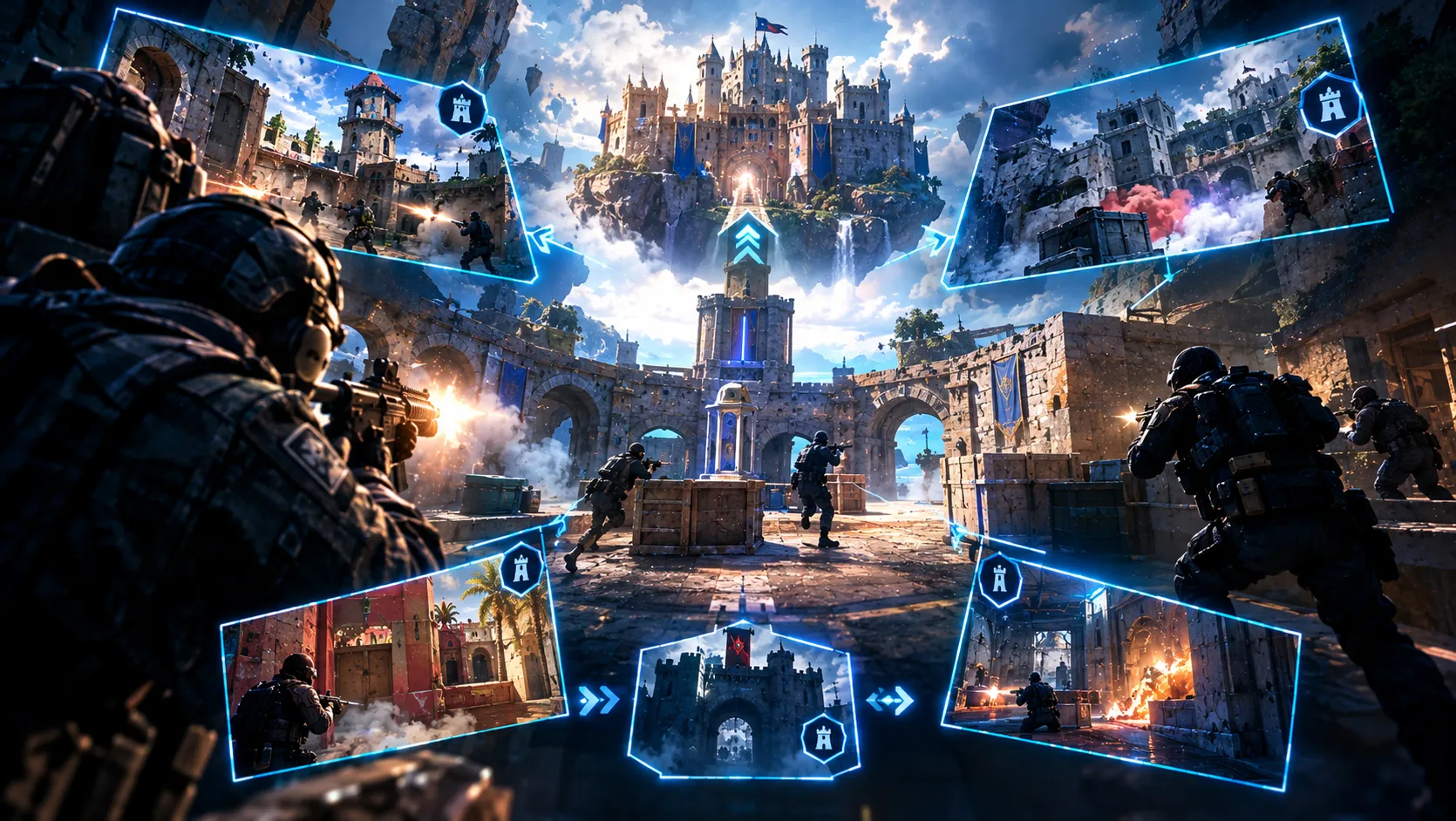
Most CS2 updates adjust something that already exists. Rush is the rare case of Valve building an entirely new format from scratch, and it plays nothing like a shrunk down version of Competitive.
The Basic Shape of a Match
Rush is a queued 3v3 mode, meaning you find it as its own dedicated option in the Play menu rather than a variant tucked inside an existing mode. Instead of the usual back and forth on a single map, two teams of three fight their way through a chain of separate battle arenas, trying to push all the way to the opposing team's castle. Both teams start in a neutral arena in the middle, and the specific lineup of arenas on each side gets selected at random, so the exact sequence you play through changes from match to match even when the overall structure stays the same.
How Winning a Round Actually Works
Each round happens in two distinct steps, and missing this distinction is the easiest way to misunderstand the mode entirely. The first step is the fight itself, where your team needs to either eliminate the other team or survive until the round timer runs out. Winning that fight doesn't automatically hand you the round, though. Every arena has a tower that has to be physically captured, and capturing it means walking up to it and pressing the interact key. Whichever team controls that tower once the fight resolves, whether through elimination or the clock running out, wins the round and pushes the fight one arena closer to that team's target castle. Losing a round pushes things back the other way. The match ends the moment a team actually captures the tower sitting inside the opposing castle.
That two-step structure creates a genuinely different flow than standard Competitive. Killing everyone on the enemy team matters, but it isn't the win condition by itself, and teams that understand this tend to play with noticeably more attention to holding position near the tower rather than just chasing kills.
What Carries Over From the Rest of CS2
Rush keeps the core gunplay, weapon buying, and economy systems that make Counter-Strike feel like Counter-Strike, just compressed into a much shorter, faster format built around close range fights in tight arenas. If you've got two friends and don't want to commit to a full length Competitive match, this is built specifically for that situation. A full three person premade isn't required either. You can queue with fewer than three and let matchmaking fill whatever's left.
What Rush Deliberately Leaves Out
Unlike Competitive or Premier, Rush doesn't use a traditional Skill Group or rating system. Instead, it tracks your wins on a friends leaderboard, which frames the mode as something closer to a fun, social format than a ranked ladder you're expected to grind seriously. Prime status isn't required to access Rush at all, which is a genuine departure from how Valve gates most of its other modes. Prime still matters in the background even here, since Prime accounts get matched with other Prime accounts and remain eligible for Prime-exclusive rewards, but the mode itself never locks you out for not having it.
The Update Rush Arrived Alongside
Rush launched as part of a broader update that also reworked how Premier selects maps, moving away from the old ban-it-down-to-one system toward a format where both teams pick two maps each and one of those four picks gets chosen at random. The same patch added silent reloads, brought back Clan Tags, let players apply stickers to the C4 itself, and gave blood effects and bullet impacts a more visible overhaul. None of that is part of Rush specifically, but it's worth knowing the mode didn't arrive alone, since a few of these other changes affect how the rest of the game feels right alongside it.
Whether It's Worth Trying
If your group of three has been bouncing off the length of a full Competitive match, or you specifically enjoy close range fighting with SMGs and shotguns over long range angles, Rush is built almost exactly for that itch. It won't replace ranked play for anyone chasing a specific rating, since it was never designed to, but as a fast, social alternative that still uses real CS2 gunplay underneath, it fills a gap the game genuinely didn't have covered before.
Test a Different Kind of Quick Match
Rush rewards fast reads and tight teamwork in short bursts, and that same instinct for quick, sharp thinking is exactly what the mini games on CS Guess are built around, testing your knowledge of prices, rarity, and this game's history, with free perks for playing well.
Head over to CS Guess and see how fast your own instincts really are.